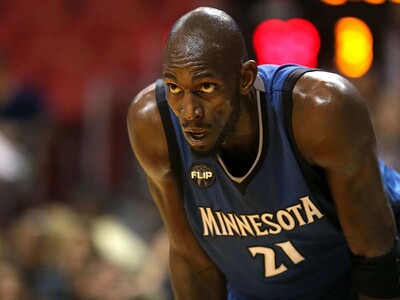


Memphis Grizzlies forward Brandon Clarke was found with 235 grams of kratom when police stopped him for speeding in Arkansas six weeks before his death at 29, sparking scrutiny of a substance experts call "gas station heroin."
Clarke was arrested on April 1 after officers caught him overtaking multiple vehicles at more than 100mph in a no-passing zone in eastern Arkansas. A blue duffle bag in his Corvette contained multiple small packages of green powder. "It's just kratom, it is legal," Clarke told the officers. Kratom is legal in most states, but Arkansas had banned it. Clarke also had a THC vape pen and a prescription for Toradol, a painkiller commonly used to treat sporting injuries.
Clarke was found dead on May 12 in the San Fernando Valley. His death is being investigated as a potential overdose after drug paraphernalia was found at the scene. No official cause has been announced and the inquest is ongoing.
What is kratom?
Kratom is derived from the leaves of a tropical tree native to Southeast Asia, in the same botanical family as coffee. It is sold legally in smoke shops, convenience stores and online, marketed as a natural wellness product. The industry is estimated at $1.5 billion a year, according to the American Kratom Association.
Sold in brightly-colored cans resembling energy drinks or capsules that pass as vitamins, kratom has been dubbed "gas station heroin." Dr Josef G Thundiyil, a medical toxicologist and emergency physician with Orlando Health, said its retail setting creates a false sense of safety. "That it's sold very unregulated in tea shops, smoke shops, gives a false reassurance," he said.
Thundiyil warned that reported side effects include addiction, seizures, liver failure and death. "Kratom is an addictive substance. It can, and does, kill," he said. Government figures show poison center calls related to kratom jumped 1,200 percent in 2025 alone to 3,400. The US Centers for Disease Control and Prevention recorded 233 kratom-associated deaths between 2015 and 2025, many involving kratom mixed with alcohol or other drugs.
The risk to athletes
Dr Zaid Fadul, a board-certified physician and founder of Bespoke Concierge MD, said kratom behaves differently depending on dose. "At low doses, it can be a stimulant and can cause pain relief," he said. "Higher doses have different effects. It can be sedating. Any dose for a prolonged period of time, you get chemical dependence, then eventually addiction."
A particular danger for athletes, Fadul said, is that kratom masks pain without treating the underlying injury. "That's when a stress fracture turns into a real fracture," he said. "You want recovery for athletes. You don't want pain masking. You want real recovery."
Thundiyil acknowledged that athletes may turn to kratom to avoid opioids, but cautioned against it. "My warning would be kratom is probably not that solution; it's unproven," he said. "The harms are growing. You may be jumping out the pot and into the fire."
Other athletes linked to kratom
Clarke is not the only athlete connected to the substance. In 2021, UFC veteran Diego Sanchez's former coach Joshua Fabia accused him of being "strung out" on kratom and other substances. Sanchez denied the allegations.
Fellow wrestler Joey Janela claimed in a 2025 interview that Sabu, whose real name was Terrance Brunk, had taken kratom daily for years to get off other substances and was given it before his final match. Sabu died at 61 in May 2025, three weeks after the bout. GCW, which hosted the match, denied any involvement in his death.
The United Football League partnered with CBD Kratom in 2024, citing its potential to enhance physical performance and aid chronic pain. The partnership ended before the start of this season. The Missouri Attorney General's Office has since launched an investigation into CBD Kratom for alleged deception and fraud.
Regulatory status
Kratom is not classified as performance-enhancing by the World Anti-Doping Agency, which removed it from its monitoring list in 2018. The United States Anti-Doping Agency advises against its use over health hazards but has not banned it.
Tennessee, where Clarke played for the Grizzlies, banned kratom from July 1, three months after his arrest and weeks after his death.