
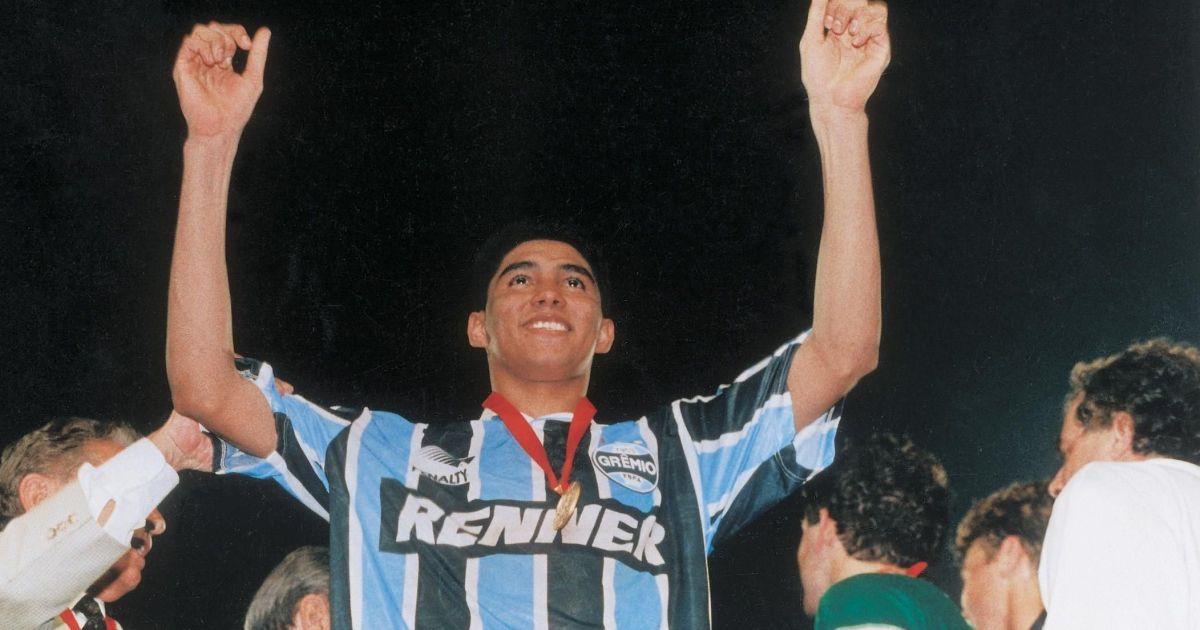
Former Brazil, Grêmio and FC Porto striker Mário Jardel has revealed that he nearly died from a cocaine overdose after falling into depression over his omission from the 2002 FIFA World Cup.
Speaking in an interview published on Thursday, November 12, by the Italian newspaper La Gazzetta dello Sport, the 53-year-old Brazilian recounted his struggles with substance addiction and mental health following his exclusion from the national team.
Jardel identified his absence from the Brazil squad for the tournament in South Korea and Japan as the starting point for a series of personal crises that almost cost him his life. La Gazzetta dello Sport, based in Milan, is Italy's oldest and largest daily sports newspaper.
A prolific centre-forward who first rose to prominence at Grêmio in southern Brazil by helping the Porto Alegre club win the 1995 Copa Libertadores, Jardel went on to become one of European football's leading goalscorers at the turn of the century.
Omission from the 2002 Brazil World Cup squad
Jardel told the Italian publication that he still asks himself to this day why then Brazil head coach Luiz Felipe Scolari did not call him up for the 2002 World Cup, adding that nobody has ever given him an explanation.
The retired forward said that between the late 1990s and early 2000s he ranked among the top five strikers in the world. During his four years in Portugal's top division with FC Porto, he scored 168 goals in 175 matches.
In the season immediately before the 2002 World Cup, Jardel scored 55 goals in 42 games for Lisbon club Sporting CP and won his second European Golden Shoe, the annual award presented to the highest goalscorer in league matches across Europe's national top divisions.
While acknowledging the quality of the forwards competing against him for a place in Brazil's attack, Jardel maintained that his club form merited a spot on the team managed by Scolari. Brazil went on to win their fifth World Cup title at the tournament in Asia with a forward line led by Ronaldo, Rivaldo and Ronaldinho.
Depression, divorce and cocaine overdose in 2003
The professional disappointment of missing the World Cup coincided with the end of Jardel's marriage to his first wife, Karen Jardel, as well as legal difficulties over the custody of their children.
Faced with those personal and career setbacks, the former striker turned to alcohol in an attempt to escape his sadness. He explained that playing in a World Cup had been the dream of his life, and that his first wife leaving him alongside child custody disputes made him feel as though everything was slipping through his fingers.
Jardel added that the worst period of his life was still to come. In the summer of 2003, he tried cocaine for the first time, explaining that he believed he could use the drug during the off-season holidays when players were not subject to anti-doping tests.
He recounted that he liked the drug because it made him feel alive rather than depressed. On one occasion, he stayed awake for an entire week before suffering an overdose and nearly dying, surviving only because a friend who was with him intervened to save his life.
Psychiatric treatment and recovery with second wife Sandra
Jardel described the overdose as the moment he hit rock bottom. To confront his substance dependence and depression, the former player spent several months undergoing psychiatric treatment.
He also highlighted the role of his second wife, Sandra, in his recovery process and in helping him rebuild his personal life after his battles with alcohol and drugs.
According to Jardel, he spent months talking with psychiatrists but was only able to overcome his addiction after meeting Sandra. He said that she helped him understand the meaning of life and that he is happy today.
Unpaid wages and supporter backlash at Ancona
During the interview, Jardel also looked back on his troubled spell in Italy with Ancona in 2004. The central Italian club was in a delicate financial situation at the time, stood on the brink of bankruptcy and carried a squad of 42 players while competing in Serie A, the top flight of Italian football.
Despite the size of the roster, Ancona failed to move off the bottom of the league table, finished the season in last place and subsequently declared bankruptcy. Jardel stayed for just six months and said he holds only bad memories from his time there, noting that he did not receive any salary and played in only three matches.
His relationship with Ancona supporters soured before his first match against Perugia. Confusing the kit colours of the two teams during his stadium presentation, Jardel greeted and applauded the opposing Perugia supporters, an incident that angered a section of the home fans.
Jardel explained that he was 31 years old and overweight when he arrived in Italy, and that someone mocked his weight by calling him Lardel after he waved to the wrong side of the ground because both clubs were wearing the same colours.
Transfer interest from AC Milan and Barcelona
Although he spent the latter part of his career moving across several countries, with spells in Brazil, Cyprus, Bulgaria, Australia, Argentina and England, Jardel revealed that at his peak he came close to joining two of Europe's biggest clubs, Barcelona and AC Milan.
He said he caught the attention of AC Milan after scoring four goals in five matches against the Italian side while playing for Turkish club Galatasaray and FC Porto during the period when he was nicknamed Super Mario.
Jardel recounted being told that AC Milan owner Silvio Berlusconi, the Italian media magnate and former prime minister who led the club for three decades, wanted to bring him to Milan because he had a special fondness for goalscorers. However, the transfer never went through due to bureaucratic issues about which Jardel was never informed.
Asked which striker in modern football he identifies with the most, Jardel did not hesitate to name Norwegian and Manchester City forward Erling Haaland. Now 53, the former Brazil international lives in Fortaleza, the capital of the northeastern Brazilian state of Ceará, where he works in real estate investment.