

Spanish football has escaped disruption during a nationwide general strike on Wednesday, 11 November, as an international break left domestic fixtures on hold across Spain.
The nationwide strike, called by major trade unions including Comisiones Obreras, the Unión General de Trabajadores, the Confederación General del Trabajo, and the Confederación Nacional del Trabajo, brought early morning picket lines, road blocks, and moments of tension across the country.
While workers across Spain were free to exercise their right to strike, the impact on football was minimal because the domestic calendar had paused for national team fixtures.
Players in the Spanish national team do not have the right to strike during international duty. Under Spain's Sports Law, players are legally required to attend national team call-ups, but they maintain no employment relationship with the Royal Spanish Football Federation (RFEF), meaning the federation does not function as their employer.
With no official matches taking place and some clubs cancelling training sessions, the day had almost no impact on the sport. The walkout has instead highlighted the history of football strikes in Spain, which features seven major joint protests since players first organised.
The 1979 Boots Strike And The Right Of Retention
The first joint strike took place in 1979, one year after the founding of the Association of Spanish Footballers (AFE). The union was established in large part through the efforts of Manolo Esteo and Juanito, former teammates at Atlético Madrid.
Players staged the walkout, known as the fallen boots strike, to demand the abolition of the right of retention, inclusion in the national Social Security system, and the removal of the 23-year age limit in the Tercera División.
Under the right of retention, clubs could block players from moving even after contracts ended. Organising the stoppage proved controversial in post-Franco Spain. Jaime Sabaté, a former Real Betis player and author of a book on the union's origins, told sports newspaper Marca that critics treated the players like pretty, spoiled, and capricious boys.
Sabaté said Betis had their match against Real Murcia postponed to the following Sunday, when supporters at the Benito Villamarín stadium shouted abuse at the squad. He explained that Francoist structures remained in place and manipulated public perception because authorities did not want football to stop.

The strike disrupted the opening round of the league season and marked a turning point in the professionalisation of Spanish football, establishing players as workers with full employment rights.
Industrial Disputes Over Wage Guarantees And Youth Squads
Player strikes intensified during the 1980s as athletes pushed for basic financial security and the enforcement of earlier agreements.
A second strike took place in 1981 after clubs failed to honour commitments made in 1979, leaving many players in precarious conditions, particularly in the lower tiers. The union demanded guarantees for wage payments and the creation of a salary guarantee fund.
The dispute halted the first round of league fixtures on 6 September 1981, when no matches took place. Clubs fielded youth teams for the second round on 13 September, but players called off the strike after winning payment of outstanding debts and the abolition of rules requiring teams to field under-20 players.
Spanish football stopped again on 9 September 1984. Players demanded the removal of age limits, the regulation of transfer clearance letters and retention rights, and the payment of unpaid debts from prior seasons.
Clubs again fielded youth players on 9 September, but the league prohibited the tactic for the following weekend, leaving fixtures on 16 September completely unplayed.
Negotiations produced an agreement that improved job security and provided the first step toward the complete abolition of the right of retention, which was permanently eliminated in 1986.
General Strike Solidarity And The 2011 Wage Walkout
The player strike on 14 December 1988 was not organised by the AFE over football issues, but took place in solidarity with a national general strike called by majority unions UGT and CCOO.
That general strike protested against labour policies introduced by the government of Prime Minister Felipe González, specifically reforms that made dismissals easier and created temporary contracts for young workers.
Football halted again at the start of the 2011 season when players rebelled over widespread unpaid wages, shutting down the opening two rounds of fixtures in the top two divisions.
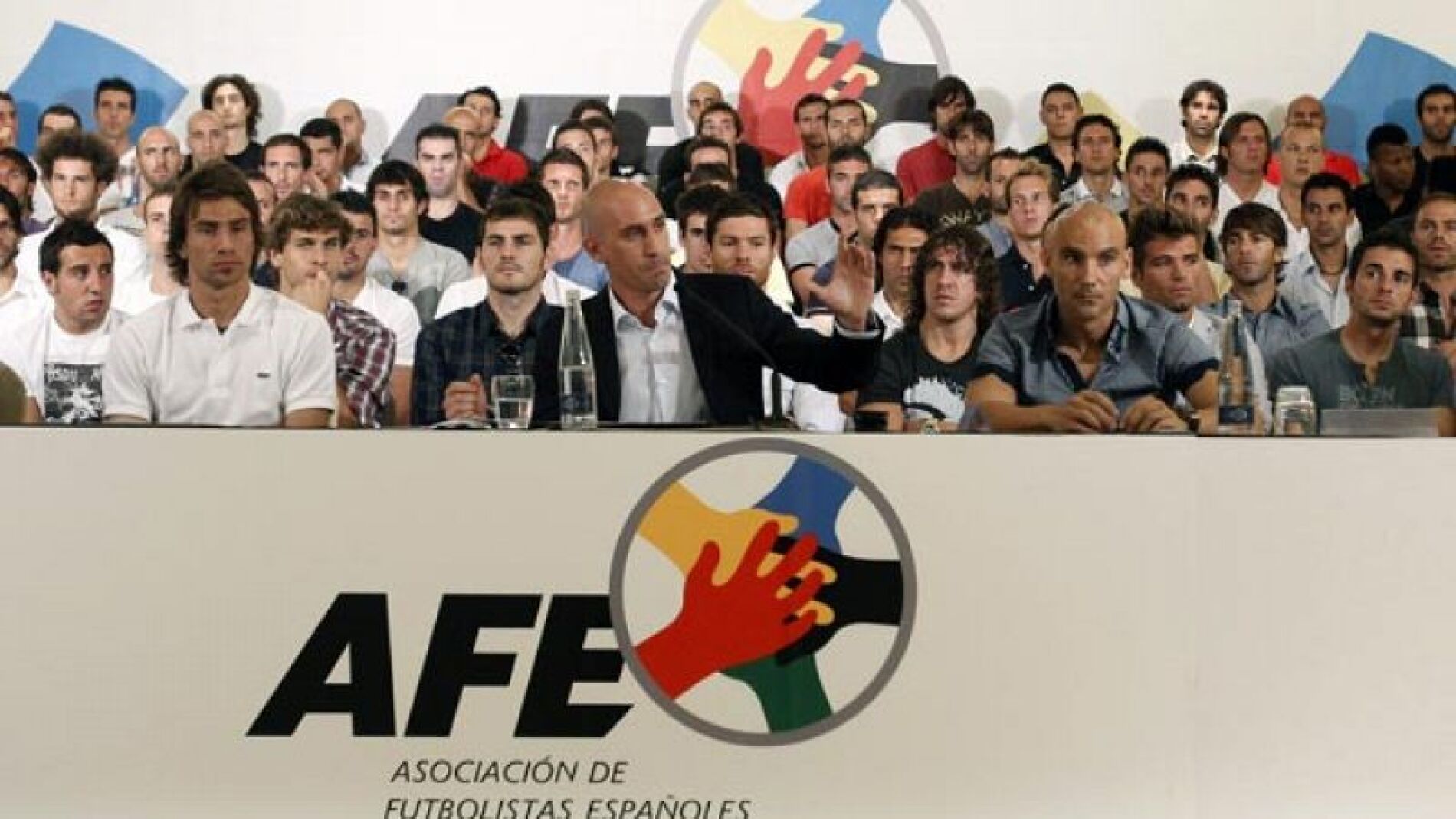
Luis Rubiales, then president of the AFE, announced that the league would not start until an agreement was reached on a collective bargaining agreement between the union and the Liga de Fútbol Profesional (LFP). Rubiales said players had united and said enough was enough.
Star players rallied behind the union chief, with Spain internationals including Iker Casillas, Carles Puyol, Xabi Alonso, Fernando Llorente, Javi Martínez, and Santi Cazorla attending a joint press conference.
The strike was called off after authorities agreed to create a new salary guarantee fund, established an expedited contract termination process for players unpaid for three months, and guaranteed wage payments for players whose clubs were relegated.

Audiencia Nacional Injunction And The Miami Match Stoppage
In 2015, the AFE called a strike in response to Royal Decree-law 5/2015, which established the centralised sale of audiovisual rights in professional football.
Although players supported the strike, Spain's high court, the Audiencia Nacional, took the unprecedented step of suspending the stoppage called for 10 May 2015, requiring a deposit of five million euros. As a result, the final two rounds of the season were played normally.
The most recent protest arrived in October 2025, when the union, led by president David Aganzo, opposed plans by LaLiga and its president, Javier Tebas, to move a league match between Villarreal and FC Barcelona to Miami in the United States.
Rather than a full strike, players staged a symbolic stoppage lasting between 10 and 15 seconds at the start of every match during the ninth round of Primera División fixtures between 17 and 20 October 2025.
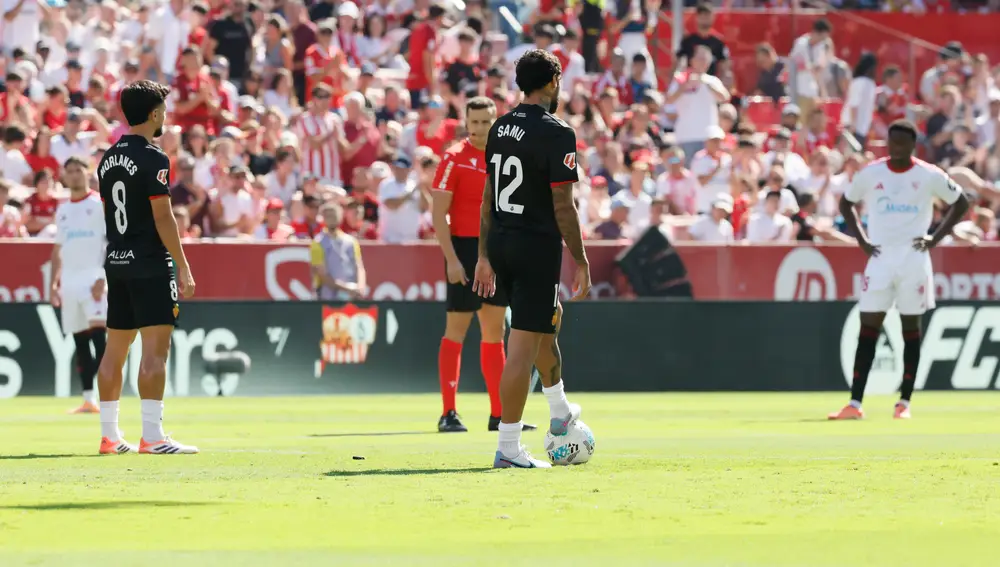
Controversy erupted when television broadcasters failed to show images of the protest during early matches or broadcast the stoppage only from distant wide angles.
The AFE issued a blunt statement rejecting any initiative that lacked the approval of the main protagonists of the sport. The union demanded that the employers' organisation set up a negotiating table to share all information, analyse the exceptional nature of the project, address player concerns, and guarantee the protection of labour rights and current regulations.
Following the collective action, the overseas fixture plan was abandoned and the match between Villarreal and Barcelona was played in Spain.