

Paris Saint-Germain was forced to relinquish hosting Rennes at the Parc des Princes stadium on Sunday after repeated summer heatwaves severely damaged its pitch.
With the condition of the grass at the Porte d'Auteuil venue failing to guarantee player safety, the Ligue de Football Professionnel (LFP) decided to reverse the opening matchday fixture of the French Ligue 1 championship. Paris Saint-Germain, the double European champion with the largest operating budget in French football, stated on Wednesday evening that the latest heatwave episode accelerated grass deterioration on a surface that had only recently been sown. The club confirmed it has identified a replacement solution for upcoming home fixtures, though it did not disclose further details regarding the precise cause of the damage.
Six hundred kilometres south, Toulouse FC will also play on a newly laid pitch on Saturday evening when they face Lyon at the Stadium de Toulouse. The venue's green carpet had to be replaced in an emergency procedure this week following what local authorities described as recent exceptional heatwave episodes. Extreme temperatures considerably weakened the grass and encouraged the spread of summer plant diseases, prompting the local metropolitan government, La Métropole, which manages the stadium, to fund an emergency replacement costing 600,000 euros.
Pathogen Spread and Agronomic Research
At the end of June, during the summer's second heatwave, the LFP formed a partnership with the IAGE laboratory in Montpellier, an agronomic research institution that collaborates with 18 clubs across Ligue 1 and Ligue 2. Scientific director Olivier Courot stated that severe heat episodes clearly foster conditions for dangerous plant pathogens to thrive. He identified pyriculariose, an aggressive fungal disease that has spread extensively across France in recent years, as the primary threat due to the scarcity of effective treatment options.
Courot explained that pyriculariose develops across France when pitches are watered during drought periods, calling it the most aggressive, virulent, and difficult disease to manage when left undetected. Reflecting on Paris Saint-Germain's current situation, Courot remarked that even clubs with substantial financial resources struggle to control unpredictable environmental hazards. The Montpellier-based laboratory, whose neighboring Stade de la Mosson had its turf devastated by the same fungal outbreak in 2022, conducts diagnostic testing to restrict pathogen proliferation, which can enter facilities through seed supplies or other vectors.
The microbiologist warned that failing to detect an initial infection allows the fungus to re-spread, making pyriculariose exceptionally difficult to eradicate. While replacing the upper layer of turf becomes mandatory at high financial cost, Courot noted that re-turfing may prove insufficient if the fungus has established deep roots under favorable weather conditions. He described the ongoing effort as an inevitable long-term risk management process driven by climate change and unpredictable heat spikes, forcing ground managers to adopt new methods under increasingly complex working conditions.
Turf Renewal and Commercial Operations at Nice
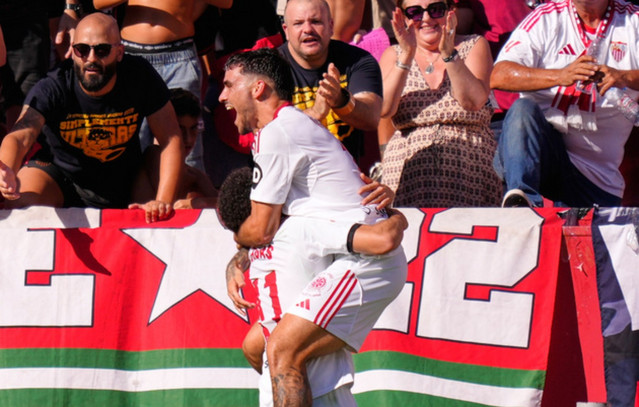
Climate change has also forced operational adjustments at OGC Nice, where head ground supervisor Jérémie Malé noted that staff must now evaluate decisions much further in advance of critical summer periods. OGC Nice, a Riviera-based club that narrowly avoided relegation to the second division last season, managed to win the BKT Ligue 1 McDonald's pitch championship for the best playing surface. Patrick Florence, general manager of Nice Eco Stadium (NES), the private company operating the city-owned Allianz Riviera stadium, modestly acknowledged that the venue had not always enjoyed such high pitch rankings.

In the summer of 2024, the Allianz Riviera pitch was severely damaged by pyriculariose, requiring an emergency replacement ahead of the season's second matchday. Following that crisis, NES invested 1.2 million euros during the subsequent off-season to overhaul the entire playing surface. The operator installed a two-layer sand foundation covered by a hybrid turf system combining synthetic fibers with natural grass, an investment funded entirely by NES.
In common with other major French venues such as stadiums in Lyon, Marseille, and Lille, the Allianz Riviera had its playing surface completely removed over the summer to host commercial concerts before a new pitch was installed two weeks ago. Florence explained that removing the grass reduced the timeframe in which diseases could take hold, describing the approach as an economic necessity for concert-hosting venues. He confirmed that the newly laid turf was performing well so far.
Ground managers are utilizing agronomic technology to track soil moisture and evapotranspiration in real time, allowing precise adjustments to irrigation schedules. Overseeing care for OGC Nice, Malé from contractor iTurf Management stated that while football clubs increasingly demand premium playing surfaces amid an expanding calendar of matches and non-sporting events, ground crews remain constrained by managing living organisms subject to natural hazards. To maintain quality throughout the year, Florence explained that ground staff overseed the pitch with winter grass species before summer grass yellows in the autumn, ensuring a smooth transition while the winter seed germinates alongside enhanced monitoring of humidity, water, and soil aeration.
Florence emphasized that maintaining a high-quality pitch represents a vital image requirement for both the club and the stadium, alongside critical economic and playability considerations. Although the general manager declined to disclose the exact annual maintenance budget for OGC Nice's field, he acknowledged that pitch upkeep constitutes a significant expenditure item in Nice Eco Stadium's operating account.