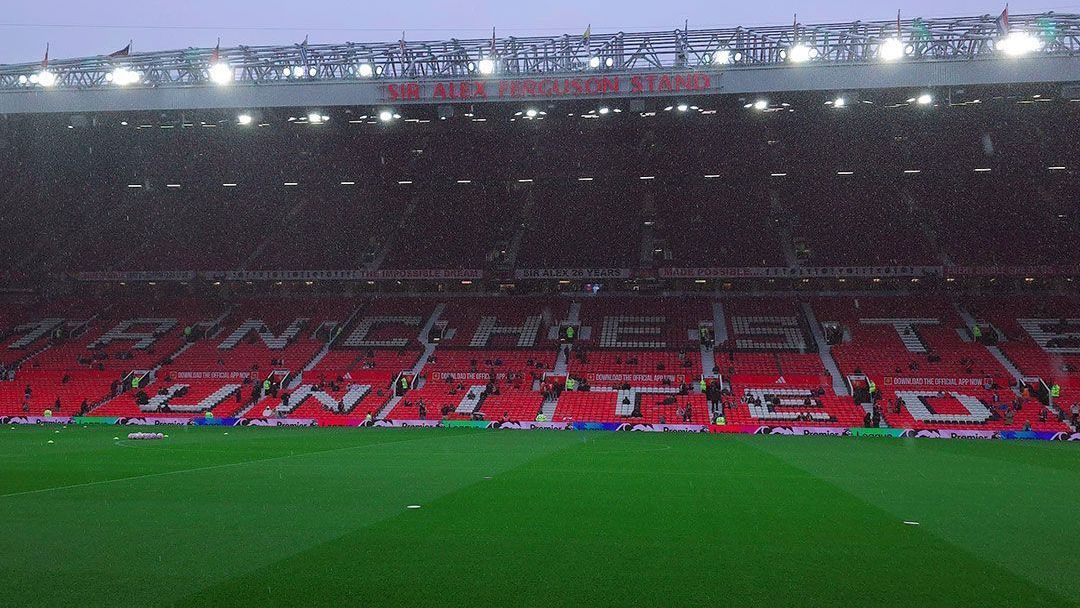


Jose Mourinho has revealed in a new documentary that he had an agreement to join Manchester United as Sir Alex Ferguson's successor in 2013 before reneging on it and returning to Chelsea from Real Madrid instead.
Columnist Oliver Holt writes that Mourinho likes to tell stories that remind people he was once one of the great managers in the game, coveted by everyone, back when those who rated Cristiano Ronaldo alongside Lionel Messi also tended to rate Mourinho alongside Pep Guardiola. Now beginning a second spell in charge of Real Madrid, working again with stars such as Jude Bellingham, Kylian Mbappe and Vinicius Junior, Mourinho may see it as timely to disclose that he was once chosen as Ferguson's heir at Old Trafford, a reminder of the status he held before recent seasons as an also-ran at Tottenham Hotspur, Roma and Fenerbahce, and a spell at Benfica last season in which his side finished a distant third in the Portuguese league behind Porto and Sporting.

A revealing admission
Holt writes that Mourinho's disclosure also confirms David Moyes was not United's first choice to succeed Ferguson. But Mourinho himself does not escape the story unscathed, Holt argues: it shows he had an agreement to join one of the biggest clubs in the world and turned his back on it, evidence of a fickleness that has sometimes seen his spells at clubs go wrong almost before they start.

The new documentary, which airs on Netflix this week, also sheds light on conflicts Mourinho had with Ronaldo, Sergio Ramos and, in particular, Iker Casillas during his first spell at the Bernabeu. Holt writes that many believe those years soured Mourinho's attitude towards modern players.
Rebuilding trust with Vinicius and Bellingham
Vinicius Junior has just signed a new six-year contract at Real Madrid, but last season Mourinho accused him of inciting opposition players with his goal celebrations, after allegations that Vinicius had been racially abused during a Champions League match between Madrid and Mourinho's Benfica. Bayern Munich coach Vincent Kompany was among those who criticised Mourinho's stance at the time.

Holt writes that if Mourinho retains the man-management skills that were once central to his success, his priority should be winning over Bellingham and making the England midfielder his leader on the pitch. Bellingham had an outstanding World Cup for England, with performances that went beyond his tirelessness and goal contributions, proving he can carry teammates with him as well as inspire by example, and that he is maturing at frightening speed.

Mourinho has named Federico Valverde as his captain for the coming season. Holt argues Bellingham, who represents youth, promise and an insatiable hunger to succeed, would have been the better choice, and writes that the relationship between Bellingham and Mourinho will be key to whether Madrid can end back-to-back league titles for rivals Barcelona. Holt suggests that if Mourinho retreats into suspicion and cynicism, Madrid's season risks becoming another familiar tale of conflict, but that embracing Bellingham's promise could yet give Mourinho his own remontada, or comeback, in Madrid.
Tennis facing competition from pickleball
In a separate note, Holt writes that after nine weeks in the United States he has developed a fondness for pickleball. He says neighbours in New Hampshire marked out a court on their driveway and bought a net from Walmart, and that he and his son also visited a two-storey pickleball club 20 miles away. Holt writes that he hopes next time to play on the courts that appear each summer on the Wollman Ice Rink in Central Park, New York City, and compares the sport's rise in the US to the growth of padel in Europe, both of which he says present a growing challenge to tennis at a time when the sport is, in his view, gravely lacking in leadership.
Maresca's task at Manchester City

Holt also writes on Enzo Maresca, who spent more than £1billion at Chelsea and celebrated finishing fourth in the league by telling doubters to "F off." Holt says Maresca will need to readjust his expectations at Manchester City, where finishing anywhere other than top of the table is unlikely to be viewed kindly by his new employers, and where, in Holt's words, following Pep Guardiola is the toughest job in the top flight of English football.