Basketball
The Russian athlete was disqualified for cocaine. It’s so stupid to risk your career!

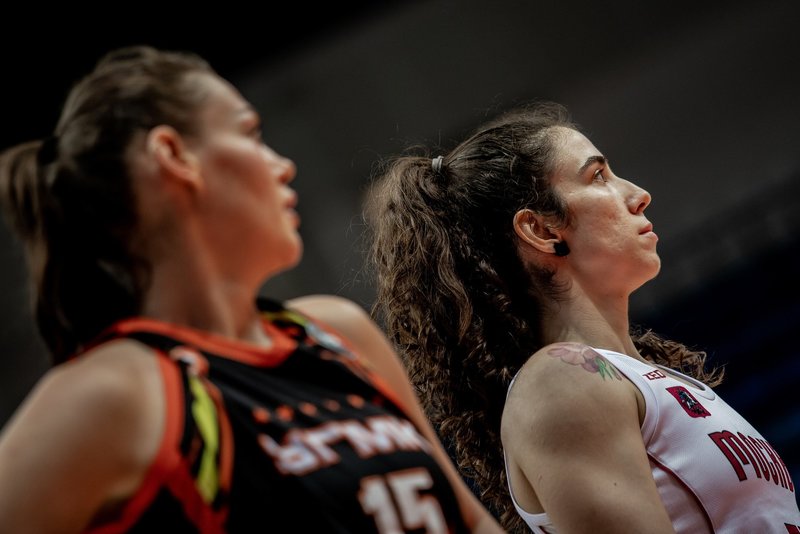
Nina Glonti / Photo: © PBK MBA
The mild sentence frankly surprised. Are WADA officials really indifferent to our sport now?
The Russian basketball player was sanctioned by the International Basketball Federation (FIBA). Traces of cocaine were found in the athlete’s sample. There was a risk of getting a long disqualification, which would be tantamount to a premature end to a sports career. However, this time international organizations decided to limit themselves to lenient punishment.
Lost interest in our sport?
vicious connection
Basketball player of the Russian national team Nina Glonti, representing the Moscow MBA at the club level, was punished by FIBA for violating anti-doping rules. The official website of the organization reports that traces of cocaine use were found in the sample of the 25-year-old attacker.
The medalist of the European Championships among juniors and youth as part of the Russian national team for a vicious relationship with illegal substances could be severely punished. According to the rules of the World Anti-Doping Agency (WADA), the detection of drugs in samples threatens athletes with a disqualification of up to four years.
For conditional Brittney Griner, of course, four years out of basketball is not such a terrible punishment. For the Russian basketball player, who is at the peak of her career, such a long suspension could lead to an early retirement from the sport. Nina was lucky – she was suspended not for four years, but only for three months, moreover, the period of disqualification expired in June.
It is necessary to draw conclusions
Glonti has already managed to return to duty and even won the All-Russian Sports Contest of the strongest as part of the Moscow team. Thus, it can be stated that the Russian woman, despite the well-known severity of anti-doping organizations towards our athletes, got off very lightly.
One might wonder why Glonti was suspended for only three months rather than four years, given how WADA is extremely intolerant of even those Russian athletes whose samples contain substances of dubious effectiveness for professional sports.
Perhaps, for meldonium or some trimetazidine, a Russian woman could be punished to the fullest extent of the law, but international controllers are quite loyal to drugs. If it is proved that the intoxicating substance was used during the out-of-competition period and this use did not affect sports performance in any way, then the period of suspension is reduced to three months. Such a situation could be observed in the case of Glonti.
Of course, it is worth rejoicing that this time the international anti-doping structures did not begin to destroy the career of a Russian athlete for a very specific offense. The MBA basketball player will certainly bring a lot of benefits to her club, perhaps even to the national team. But Nina herself needs to draw very specific conclusions from this situation: no longer indulge in any muck both on the eve of the competition and during the rest period.
Source: Sportbox


I am a sports journalist who has been writing for a news website since 2015. My work primarily focuses on sports news, but I have also written about other topics such as technology and the arts. I have an extensive background in journalism, having worked as a reporter for a local newspaper before moving to a news website.