Basketball
He served time in prison and died after a friend. The Tragedy of the Hero of “Upward Movement”

We tell how the fate of the heroes of the basketball miracle in Munich turned out. Only four have survived to this day.
The Americans had already enjoyed the victory, but the judges hinted to them that it was too early to celebrate. Play, gentlemen, just three seconds and celebrate as much as you like. In these three seconds, a real sports miracle happened – Ivan Edeshko delivered the ball to Alexander Belov, he hit the ring, and the planet saw new Olympic champions.
The legendary victory of the USSR national team over the USA in the final of the Olympic tournament in Munich turned half a century old. The fate of the authors of that basketball miracle has developed in different ways. One achieved recognition on both sides of the Atlantic, the other died of a rare disease just a few years later. The victors went to jail, went into business, became colonels and professors.
Only four of them survived to the anniversary of the victory.
Fire of the Olympics
On the night of September 9-10, 1972, the final game of the men’s basketball tournament at the Olympic Games took place in Munich. In a dramatic ending, the USSR team snatched a victory from the US team with a score of 51:50. Despite numerous protests from the American side, both at that moment and decades later, our athletes got the gold.
Some veteran fans must have personally experienced those thrilling seconds. Young basketball fans had the opportunity to feel the nerve of the confrontation thanks to the feature film “Moving Up”. The further fate of the heroes developed in different ways. Many of them have taken to the floor more than once, won medals at Olympic tournaments, won world and European championships.
In sports terms, perhaps the most brilliant continuation of his career was waiting for the most productive player in the final, Sergei Belov. Even before Munich, he was already a world and European champion, won the USSR championship and the European Champions Cup. The defender continued to shine in the domestic and international arena after a bright victory.
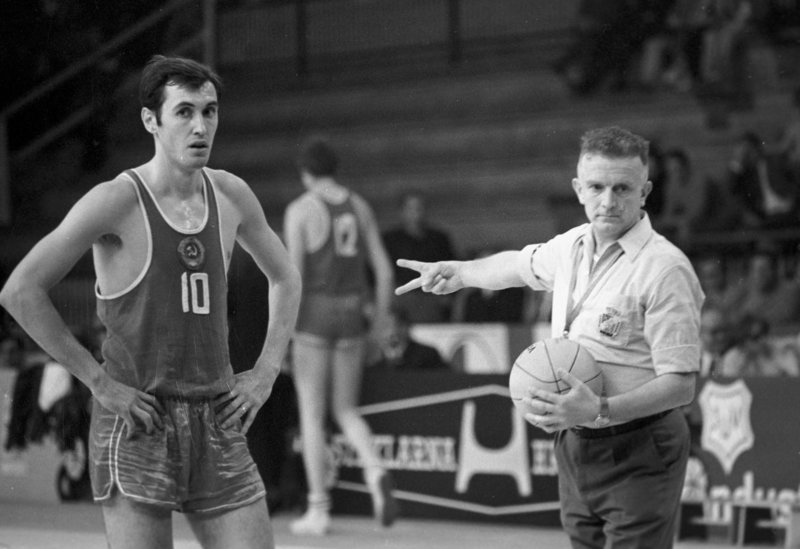
In 1980, the famous athlete was entrusted with lighting the fire of the Moscow Olympics, and in 1992 he became a legend across the ocean – Sergei Alexandrovich was included in the Basketball Hall of Fame. Belov-coach led CSKA to victories in the USSR championship, twice took the silver of the world championships with the national team, made Ural Great the champion of the country. The century of the brilliant master was relatively long – only a few months he did not live up to his 70th birthday.
rare disease
The hero of the decisive episode of the match, Alexander Belov, was not lucky enough to enjoy such a long and impressive career, although the player of the Leningrad Spartak even fell into the sphere of interests of the NBA team in 1975. The Soviet center, like his namesake, managed to harvest a medal harvest at international tournaments, then he lost his awards – fortunately, temporarily.
The customs scandals of 1973 and 1977, which to this day raise questions, almost broke the athlete’s career. True, the end for Alexander is still sadder than the spoiled sports path. In October 1978, 26-year-old Belov died from a rare disease – angiosarcoma of the heart.

Outstanding representatives of Tbilisi basketball Zurab Sakandelidze and Mikhail Korkia, unfortunately, also did not survive to this day. Both collected a good collection of medals in the national team, but at the club level, together with Dynamo from Tbilisi, they did not achieve big victories. Zurab Alexandrovich tried himself as a coach for some time, but this activity did not drag him out. In the 1990s he ran a tea factory. The champion was knocked down by a family tragedy – the death of his son. Sakandelidze began to lead a not very healthy lifestyle, and in 2004 the 58-year-old veteran died of cirrhosis of the liver.
Mikhail Shotaevich did not stay in coaches either, but he ended up in prison for four years for illegal business activities. In the post-Soviet period, he was already legally engaged in business, he also led the football Torpedo from Kutaisi. In 2004, 55-year-old Korkia was very upset by the death of a friend and just 13 days later he himself died of heart failure.
“I’m homeless now”
Gennady Volnov, for whom the final in Munich was the last chord in basketball, worked as a teacher and head of the physical training department at the military academy. Became a professor, received the rank of colonel, passed away in 2008. Alexander Boloshev coached the Dynamo women’s team, was a member of the leadership of the Dynamo and Khimki men’s teams. Passed away in 2010.
The author of the assist on Alexander Belov, 77-year-old Ivan Edeshko, is still alive today. After the end of his sports career, he was a member of the coaching staff of the USSR national team, then assisted in CSKA. For a short time he managed to work as a mentor for the army team and the Irkutsk Shakhtar. Ivan Ivanovich advised the authors of the film “Upward Movement”, and by the half-century anniversary of those events, he was not at all averse to talking to the press.
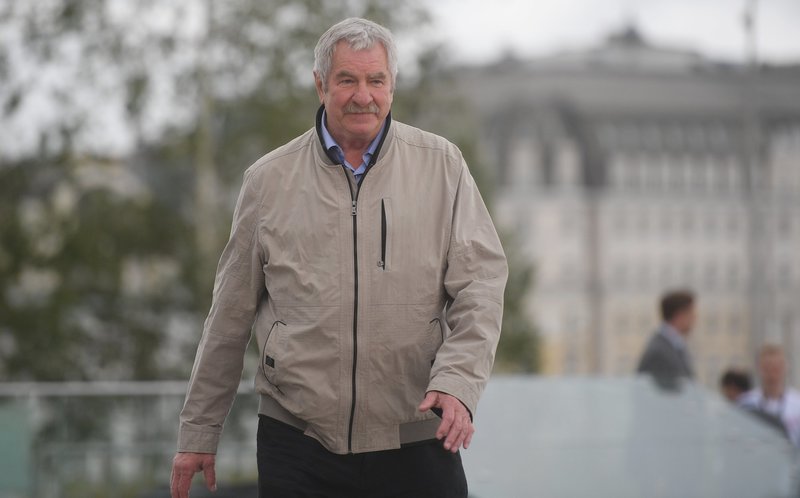
Alzhan Zharmukhamedov, another hero of Munich, is alive and well. The 77-year-old veteran, like Edeshko, lives in Moscow. After the end of his sports career, he trained the Soviet military in the GDR, worked with shooters in the Alma-Ata SKA. Like Alexander Belov, during his sports career he got into an unpleasant story at customs. A Smith and Wesson pistol was found in the basketball player’s luggage. Fortunately, for Zharmukhamedov, that story did not have a tragic ending.
Another living witness to history, 77-year-old Modestas Paulauskas, now lives in Lithuania, where he trains children. Despite the fact that in the artistic picture the athlete was shown almost as a terry Russophobe, the real Paulauskas missed his Soviet youth and Russian speech. For the sake of this, I regularly rode to train guys in the Kaliningrad region.
Anatoly Polivoda did not play in the final, but he was present in the application for the match, and therefore also became the champion. Now he lives somewhere in the Poltava region, he tries not to remember the Soviet past, but at least in everyday terms his life has more or less improved. Some time ago, a bright athlete in the past even had to go homeless.
– I’m homeless now. And what do you call a person who does not have a residence permit ?! I have nothing in my passport. Now I’m renting an apartment in Kyiv for $300,” Komsomolskaya Pravda quoted Anatoly Ivanovich as saying.
Sergei Kovalenko and Ivan Dvorny also did not play that evening. After the end of his career, the Kiev resident went into the construction industry, died in 2004 at the age of 57. The center of the Leningrad “Spartak” lived to be 63 years old and died in 2015. His fate did not develop too smoothly – the champion served time for speculation, returned to sports, after the end of his career he was engaged in beekeeping, worked as a mechanic. At the beginning of the new century, he left for the United States, but spent the last years of his life in Russia.
Source: Sportbox


I am a sports journalist who has been writing for a news website since 2015. My work primarily focuses on sports news, but I have also written about other topics such as technology and the arts. I have an extensive background in journalism, having worked as a reporter for a local newspaper before moving to a news website.