Fights
Tragedy of a Russian wrestler at the Olympics. The whole country expected gold from the standard-bearer

Nikolay Balboshin / Photo: © RIA Novosti / Vladimir Rodionov
For Nikolai Balboshin, the Olympics ended on the operating table.
The flag bearer at the Olympic opening ceremony is an important and honorable role. He must be a contender for gold and also a fairly strong athlete, because carrying the flag is a big burden. In the Soviet Union, at the Summer Games, this mission was usually assigned to wrestlers or weightlifters.
The Soviet sports officials had already decided on the most important role of the standard-bearer at the opening ceremony of the Moscow Olympics. It was the classic wrestler Nikolai Balboshin. Olympic champion, five-time world champion and six-time winner of the highest awards at the European Championships. For many years, he had no equal in the weight category up to 100 kg. And Nikolai already had such experience.
However, the home Olympics turned out to be one of the biggest disappointments in the athlete’s career.
An honorable mission
In 1976, Balboshin carried the Soviet flag at the opening ceremony of the Montreal Olympics. At the Games themselves, the Moscow Dynamo player performed triumphantly, defeating five opponents on the way to the first Olympic gold in his career. In the decisive fight, Nikolai got the better of the Bulgarian Kamen Goranov. The silver medalist could not do anything against the Soviet strongman and was disqualified for passivity.
Words at hand
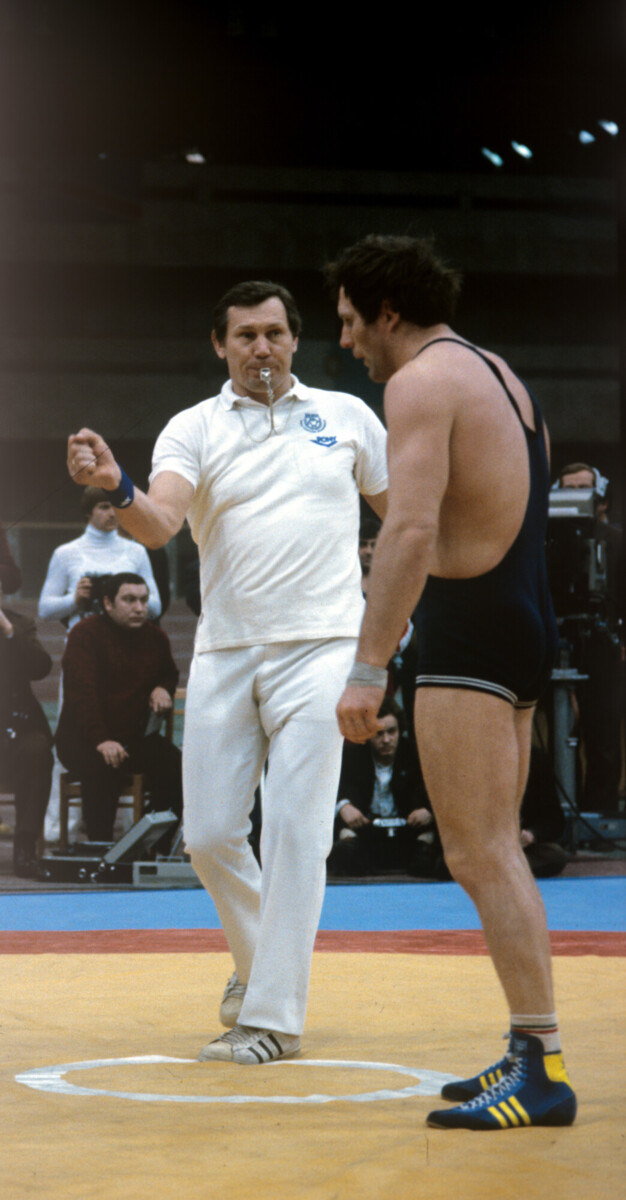
In 1980, Balboshin was again given the great honor of walking with the flag at the opening of the Moscow Olympics. No one doubted the flag bearer’s upcoming victory at the home Games. Before the opening ceremony, the USSR Minister of Sports Sergei Pavlov promised Nikolai the Order of Lenin if he won gold.
“Why are you talking behind your back, you might jinx it, Sergei Pavlovich,” Balboshin answered Pavlov.
The Greco-Roman wrestling competition in the 100 kg weight category began two days after the Olympic flame was lit in Luzhniki. Balboshin had no problems with his first opponent. Nikolai defeated Hungarian Tamas Gaspar ahead of schedule. In the second fight, our standard-bearer was already close to victory: he took Romanian Vasile Andrei to the ground, prepared to perform the decisive move and… felt a sharp pain in his right leg. Balboshin tore his Achilles tendon.
The Soviet athlete was unable to finish the fight. Moreover, Nikolai was forced to withdraw from the Olympic tournament. No second gold medal, no Order of Lenin. The main award of the Olympics went to Bulgaria with Georgiy Raikov. And the favorite of the Olympics had to undergo surgery.
The famous sports trauma surgeon Zoya Mironova later told Nikolai that the width of the Achilles tendon is usually 5-6 millimeters, but Balboshin’s was much thinner. That’s why the rupture occurred during heavy loads.
Damned Injuries
In general, injuries haunted this strongman throughout his career. First, an inexperienced nurse gave him the hepatitis virus during an injection, which led to increased trauma. And two weeks before the 1962 Olympics, Balboshin injured his knee and did not go to Munich.
— Damned injuries, they have haunted me all my life. I could have won my first gold in Munich-72. A month before the Games, I hit the Romanian Martinescu, who became the Olympic champion then, so hard that he stopped thinking. He got up from the mat and started banging his head against the wall — he thought there was a way out, — Balboshin said in an interview with AiF.
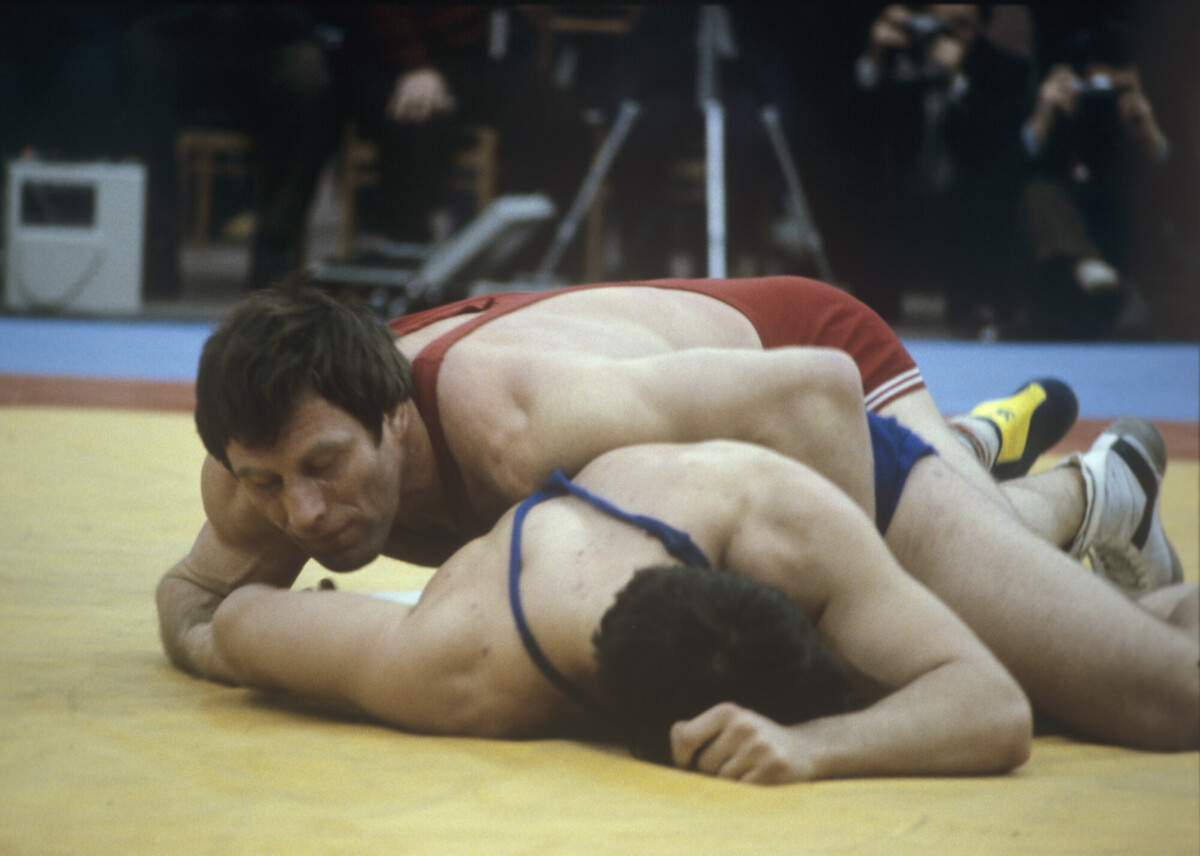
After the Moscow Olympics, Balboshin successfully underwent surgery and returned to the mat. Then the athlete began to prepare for the next Games, in Los Angeles. But Soviet athletes did not go there because of the boycott. In the final of the Friendship Games, the Olympic champion was judged unfairly in a fight with the Hungarian Gaspar, not counting several effective techniques.
“That’s how it is, I could have become a four-time Olympic champion, but I only won one gold,” Balboshin summed up his career.
Source: Sportbox

