Football
“Passed and fell.” Doctors failed to save the legendary Russian football player

Konstantin Eremenko / Photo: © RIA Novosti / Vladimir Fedorenko
Doctors advised Russian Pele to quit football, but he could not imagine life without his favorite game.
Konstantin Eremenko was the main star of the world mini-football in the 90s. You might not get carried away with this game, but you probably heard the name of the Russian wizard. During his career, he scored more than a thousand goals, but he could have achieved even more if it were not for congenital heart problems, which he learned about only at the age of 31.
It was hard for him in big football
Eremenko began his career in big football, because in the 70s and 80s futsal in the Soviet Union was, to put it mildly, far from popular. Konstantin was born in Dnepropetrovsk and took his first steps in Dnipro, in which he even once appeared on the field in the official match of the 1988 USSR Championship against Dynamo Minsk. However, he failed to gain a foothold in the powerful Ukrainian club and wandered around for several more years in other teams.
As Eremenko himself later recalled, it was physically difficult for him on the big field, but there were no problems with technique and understanding of the game. Perhaps the trouble with the heart began to manifest itself even then, it’s just that no one did the proper examinations for the football player. One way or another, in 1991 Konstantin was offered to try his hand at futsal in his native Dnepropetrovsk. He played 10 matches for the local “Mehanizator” and scored 14 times. Moreover, Eremenko even managed to become the winner of the only mini-football Cup of the USSR.
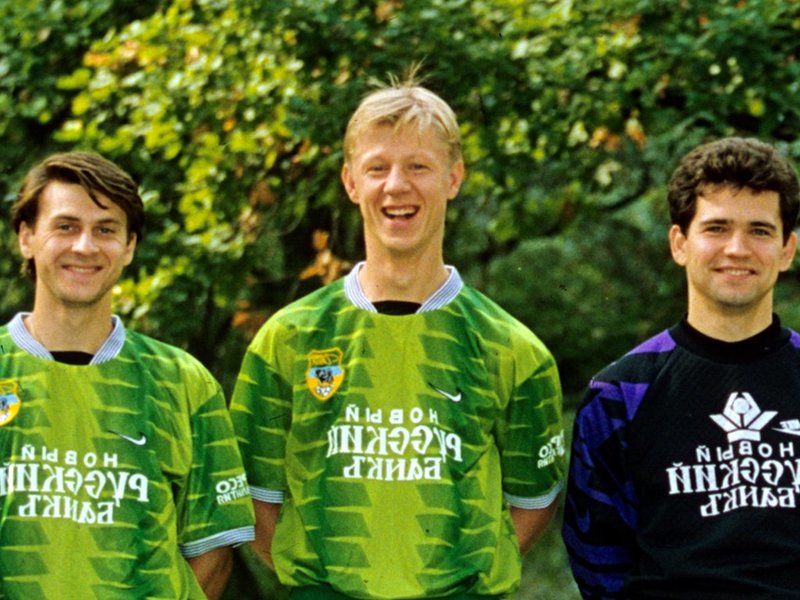
“Dina” with the great Eremenko
By that time, it was quite obvious that this sport suits Konstantin perfectly. Then he turned up the option of moving to the Moscow “Dina” – an ambitious club that dreamed of conquering Europe. Eremenko got excited about the idea and agreed to the proposal of the Muscovites. And then – it’s history! In the mid-90s, futsal in Russia gained wild popularity largely thanks to Dina, Konstantin Eremenko and the success of our team in the international arena.
On the subway, you could meet people with Dina’s yellow and green scarves, which was new then, because football paraphernalia was only gaining momentum. In this sense, futsal in the country was even ahead of big football. A big plus was the fact that families with children could go there. The atmosphere there was exceptionally friendly, in contrast to the battles of the conditional Spartak and CSKA in big football, where in those years it was easy to make problems for yourself.
Magnificent players gathered at Dean then: Arkady Bely, Timur Alekberov, Oleg Denisov. But all of them, of course, were in the shadow of the great Konstantin Eremenko, who led Muscovites to 8 Russian championship titles. The same number of times he became the top scorer of the tournament, scoring 1132 goals in official meetings. Absolutely crazy number! Finally, with Eremenko, Muscovites won the European Cup three times and fought on equal terms in intercontinental matches with formidable Brazilians.
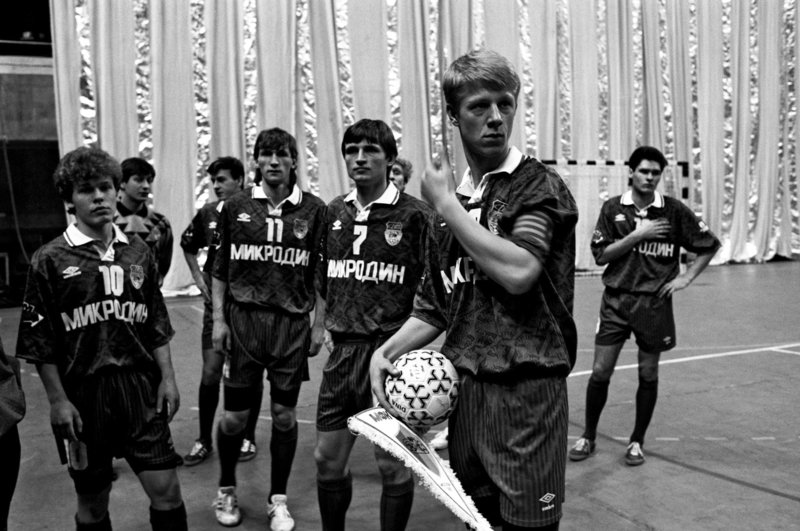
Major career success
But, perhaps, the main achievement of Eremenko in his career was his performance at the 1999 European Championship. Before that, he won bronze with the team at Euro 1996, but Konstantin, knowing his ambitions, wanted more. And now the Russian team brilliantly passed through the tournament grid and reached the final, where ours was opposed by the powerful Spanish team. With the score 2:2, it was Eremenko who brought our guys ahead, but the Spaniards managed to level the score moments before the final whistle. Everything was decided in a penalty shoot-out, where Konstantin delivered the decisive blow again – 4:2.
It cannot be said that he single-handedly decided the fate of that European Championship, after all, the composition of the Russian team was very strong. But Eremenko’s contribution to that victory was certainly huge. The magician of mini-football once again did his job. It was not for nothing that he was called the Russian Pele and was officially recognized as the best futsal player of the 20th century. He really wanted to add the title of world champion to all his titles and tuned in to this, but fate decided differently.
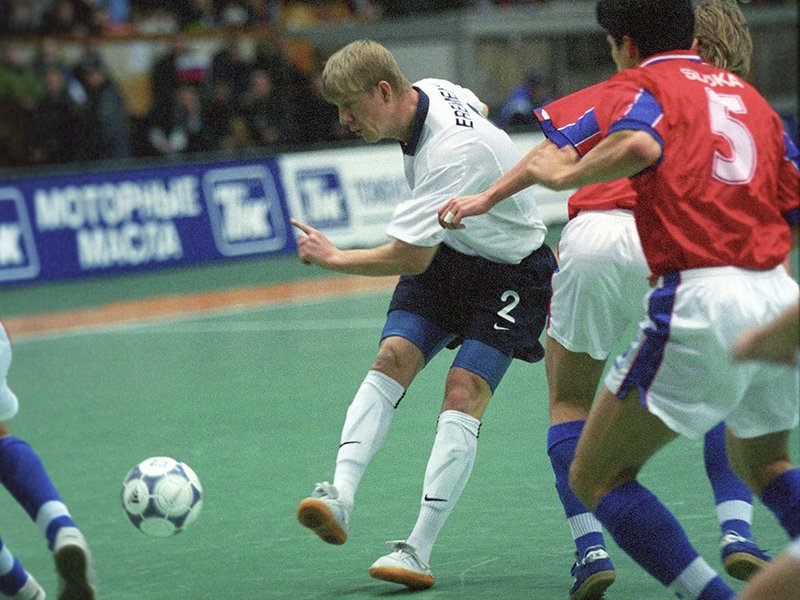
An unexpected diagnosis
In 2001, Eremenko was diagnosed with a congenital heart defect. The doctors were unequivocal in their assessments – it was categorically impossible to continue a professional career in such situations. In November of that year, Konstantin held a farewell match and finished with the sport – but only officially.
Of course, he could not completely quit football. I really loved this game. Eremenko always had a free evening to kick the ball, he also participated in major amateur tournaments, such as the Legends Cup. And, of course, he won them. The passion for winning has not gone away, despite all the health problems.
In parallel, Eremenko achieved great success in politics and management. Since 2002, he was the president of the mini-football Dynamo, then he got into the Federation Council, was on several committees at once and climbed forward like a tank. Whatever Russian Pele did, he achieved victories everywhere. Such was the character.
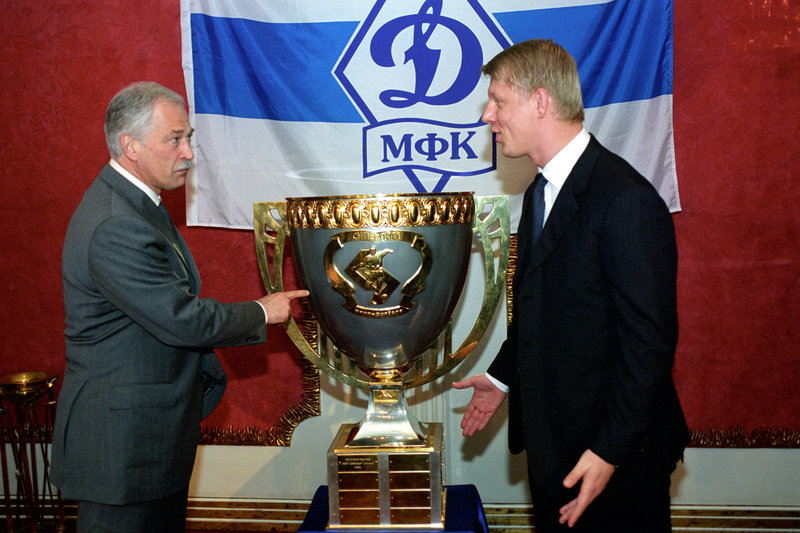
Tragedy on the field
The tragedy occurred on March 18, 2010. Eremenko spent an ordinary football evening with friends at the Dynamo Small Sports Arena. Even during the warm-up, he became ill.
– We ran together in the center of the field. Konstantin had the ball and at some point he gave a pass and stopped in the center circle right next to me. Literally a fraction of a second later, he fell, ”said Dmitry Alenichev, a former Spartak player.
An ambulance arrived in 17 minutes and took him to the hospital. However, all the efforts of doctors and resuscitators did not help. An hour before midnight, the great football player Konstantin Eremenko passed away. He never regained consciousness, and a detached blood clot was named as the official cause of death. Eremenko was well aware of his diagnosis since 2001, but could not live without football. On each occasion, he tried to drive the ball, and one day his heart still could not stand it.
Source: Sportbox


Thomas Astudillo is a sports journalist and author who writes for Sportish. He has a deep love and knowledge of sports, and is known for his engaging and informative writing on the latest sports news and events.