We will no longer see weak teams from Asia and Africa, three defenders and no rotation.
The finish of the group stage at the World Championship reduces the number of participants exactly by half and thus sets the mathematical pattern for each next stage. But the tournament is not left by superfluous teams – they are all heroes and the best in the world, but by superfluous phenomena and ideas that have lost their relevance. Things we don’t have to talk about anymore.
Africa that doesn’t know how to win final tournaments
Now he knows how: seven victories of African teams – a new record for the group stages in a single tournament. Moreover, the increase was 233%: earlier, teams from the Black Continent could not win more than three victories at the preliminary stage with common efforts. This is a real breakthrough. And the number of defeats of Africans – five – is the smallest since 1990. Moreover, the number of African teams in the final tournaments increased to five in 1998 and has not changed since then, but they were unable to complete more than three wins in all for the last six championships.
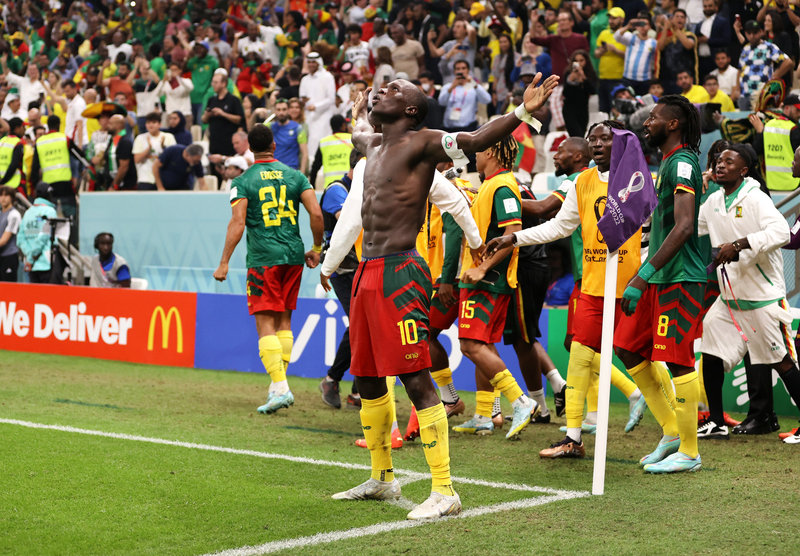
“The time has come for Africa,” Shakira sang in the official song of the 2010 World Cup, but the alarm went off only after 12 years. Cameroon became the first African team in history to defeat the great Brazil at the World Cup. What has changed? It looks like a new generation of coaches has matured in Africa. These are the people who not only spent their careers as players in European clubs, but also played in the national team with European coaches. And now they train themselves.
Aliou Cisse from Senegal played for the national team, which was coached by the French Metsu and Stefan. Moroccan coach Walid Regragui played for the national team with four European coaches: the Portuguese Coelho and the French Troussier, Michel and Lemerre. That is, footballers from Africa have been playing in Europe for many years, and now they are also coached by those who have access to advanced football techniques at all levels, but differ from European coaches by their indigenous African origin.
Asia that evaporates in a group
Not so anymore: for the first time in the history of the world championships, three teams representing the Asian confederation broke through to the playoffs. Let one of them be Australia, but the steeper her feat. After all, the Australians have already played the most within this tournament – 23 matches, because their qualifying campaign consisted of four stages and 20 games. The Asian teams overcame not only the physical and technical gap from the teams in Europe and South America, but also the mental gap.
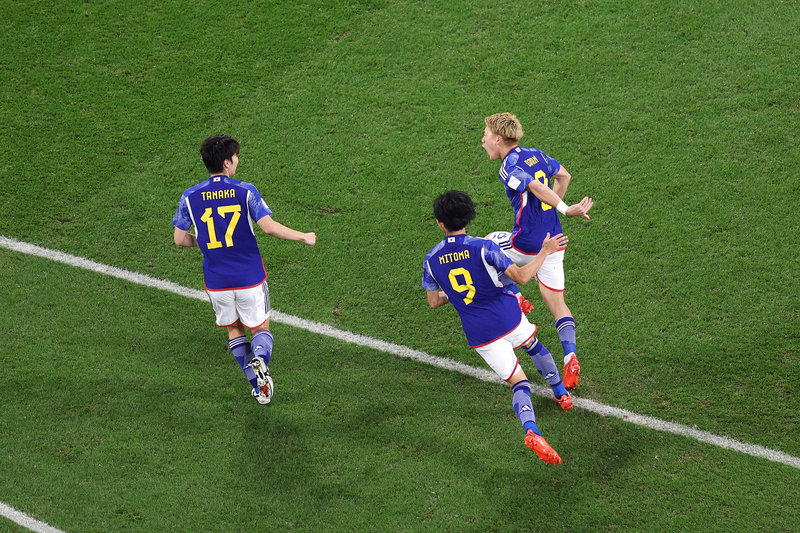
It was at this World Cup that we saw how the Asians put pressure on the old aristocracy in the endings, turn the plots around in games where they used to resign themselves. Japan is the only team at the 2022 World Cup to have already beaten two former world champions. Korea eliminated the former European champions in a crucial game. Saudi Arabia and Iran, although they did not go further, managed to puzzle Leo Messi and Gareth Bale. Asia and Africa are without a doubt the growing world football centers.
Scheme with three defenders
Fashion is almost over. All the teams left the tournament who used the model with three central defenders in all matches, except for one: Louis van Gaal is faithful to his favorite formation. In addition to the Dutch, the Poles also squeezed into the 1/8 finals, who played according to this scheme two times out of three, and the Japanese, who used this model once – in the last game against Spain. Otherwise, the construction, which was at the peak of popularity in the past decade, has lost its relevance. The Belgians, Danes, Serbs, Welsh, Uruguayans and Costa Ricans flew out of the World Cup, not to mention the Qatar team.
This does not mean that the times of the three defenders are gone forever: schemes come in and out of fashion according to a pattern that has not yet been studied. Perhaps one of the reasons for the current difficulties of the 3-5-2 and 3-4-3 formations was the introduction of a new technology for fixing offside: it is more difficult for the three defenders to synchronize when performing an artificial offside position, the computer eye gives the attackers more chances to penalize such teams for small reconstruction flaws.
The main compositions solve the main tasks
So it was before, now victories come to those who know how to maneuver the reserve. In the group stage of the 2022 World Cup, substitutes scored 23 goals, seven more than during the 2018 World Cup. This is not a record, the most (32) substitutes scored at the Brazilian World Cup 2014. But the current breakthrough of the reserves already has a solid foundation that suggests that in future tournaments the importance of substitutions will only increase: this is the first tournament where five substitutions are allowed. And the Iranian national team, which lost in the first match due to a goalkeeper injury, produced even six.
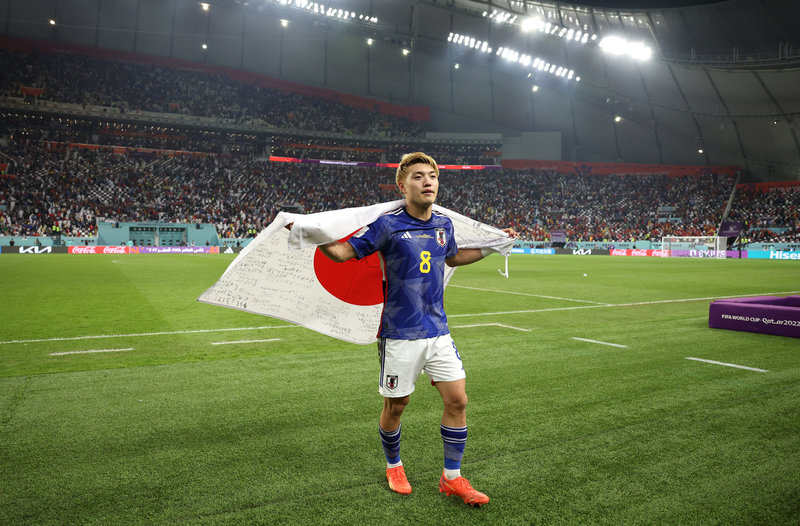
This means that the coaches have the opportunity to manage a radically new team in the second half. It completely changes the way you work. By the way, the Napoli coach Luciano Spalletti became a pioneer in formulating a new reality. He believes that with five substitutions, it is no longer possible to talk about the main team and substitutes, because the coach now has “first half starting lineup” and “second half starting lineup” in the hands of the coach. In this World Cup, Japanese Hajime Moriasu brilliantly uses substitutions: his super-substitute Doan came out and scored against Germany and Spain.
VAR no longer misfires
I would like to say so at the end of the group, but for now this is a wish. VAR really doesn’t slow down matches any more, views are very fast and generally happen less often than, for example, in our Russian championship. Huge referee teams (9 people each, if all video specialists are added to the field team), made up of referees from all over the world, work quite synchronously. But Uruguay will never agree with this, which was just right to be renamed Uruguay: in the matches with Portugal and Ghana, the South Americans suffered because of decisions around penalties, which, by definition, interfere with video referees.
They were given an 11-meter penalty for touching Jimenez’s hand, but they didn’t – for the fall of Nunez. In addition, in the first of these cases, it was his video assistant, Abdullah Al-Marri from Qatar, who pushed the Iranian judge Fagani to a dubious decision. Which was later involved in another scandalous situation with the canceled goal of Griezmann against Tunisia. And if Al-Marri still receives an appointment at this World Cup, this can only be explained by a gesture of respect for the host country from FIFA.