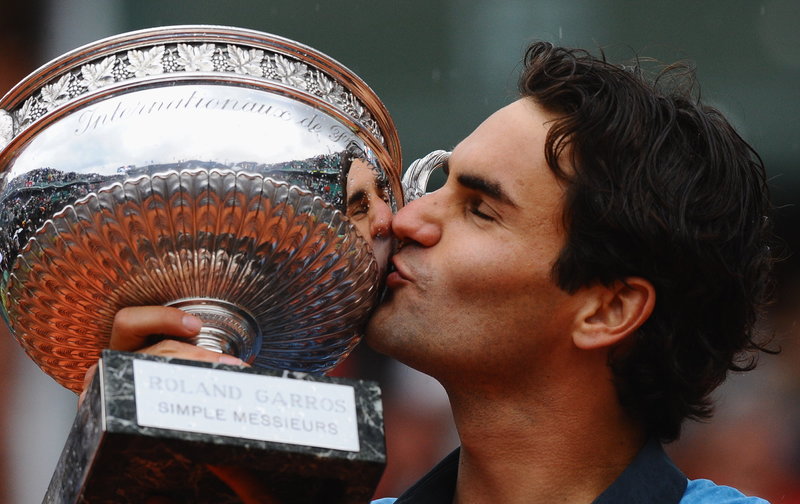
Only 10% of his fortune the Swiss earned on the tennis court. But once finances did not interest him.
The retirement of the legendary Roger Federer every year became more and more likely. The 41-year-old Swiss decided to announce the decision to finally part with professional performances on September 15. His last tournament will be the Laver Cup in London next week.
The most titled champion of Wimbledon and the US Open, who has won 103 titles in his career, can rightfully be considered one of the kings of tennis. However, Federer managed to go down in history not only thanks to his sporting success, but also due to his amazing commercial streak.
In 2021, Roger was among the six billionaire athletes, while he earned only $ 130 million directly on the court.
So how much has Federer made during his career? And how did he manage to become one of the richest athletes in history?
At the beginning of his career, Federer did not think about money
Since the end of 2002, four years after the start of his career as a professional tennis player, Roger began to collaborate with Nike. In 2007, after the expiration of the first contract, under which he was paid 100 thousand dollars a year, the Swiss athlete and the sports brand could not agree on the terms of a new deal for a long time. Federer’s interests at that time were represented by an agent, but due to the ensuing financial squabbles, the athlete had to negotiate on his own.
A new agreement on improved terms was nevertheless signed, but soon Roger suddenly decided to break the contract and made his own father and future wife his official agents.
For a long time in the tennis community, it was believed that Federer was earning too little from sponsorship payments, and Roger himself subsequently explained his reluctance to delve into the business by focusing on sports results. However, in the wake of tremendous success and leadership in men’s tennis, the Swiss environment convinced him to pay attention to money.
In 2007, Federer, along with golfer Tiger Woods and football player Thierry Henry, became the face of the famous American brand Gillette, then entered into a lifetime agreement with Wilson, and in 2008, Roger signed a new contract with a sportswear and footwear manufacturer, agreeing on record payments of 10 million dollars.
Business flourishing
By the beginning of the new decade, Federer was already earning $43 million a year thanks to contracts with major brands, subsequently founding his own management company, Team8. And his income only continued to grow: it got to the point that in 2018 the Swiss refused a lucrative contract with a former outfitter and agreed to a 10-year deal with Japanese clothing brand Uniqlo worth $ 30 million a year.
In 2019, Roger signed a contract with the young sneaker brand On Running, at the same time becoming its investor: Federer invested more than $ 50 million in this company. And the rate paid off to the maximum – by the end of 2021, the company was already worth almost $ 10 billion, while 3% of the shares belong to Roger, which is about 300 million.
What does he spend on?
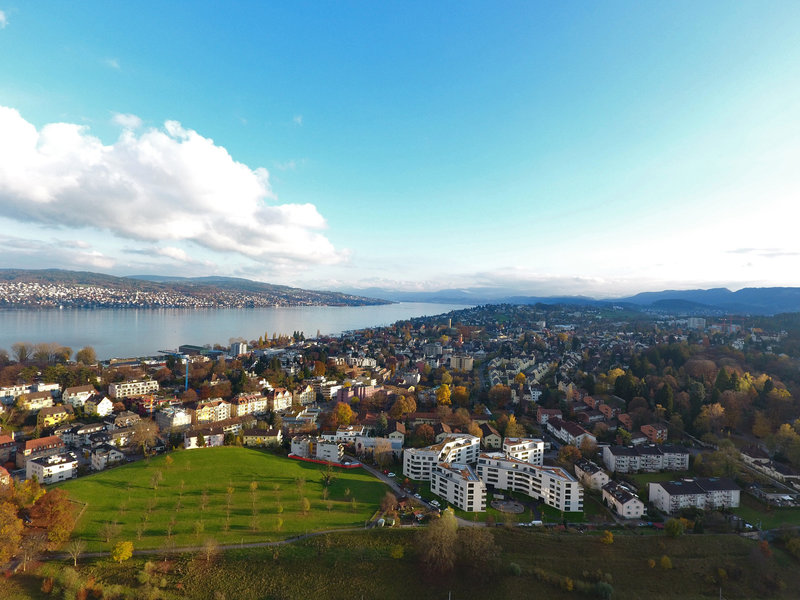
Like most superstars, Federer spares no expense in real estate, cars and jewelry. The tennis icon has three homes, including a stunning mansion on the shores of Lake Zurich in Switzerland. Roger also has real estate in the Swiss Alps, South Africa and Dubai.
Under the terms of the contract with Mercedes, Federer chooses only cars from this manufacturer: the most luxurious car in Roger’s garage is the AMG SLS roadster worth $270,000. The Swiss also prefers expensive watches of the Rolex brand, paying more than 50 thousand for them, according to media reports. However, according to the athlete, he puts most of the money in the bank. In 2018, Federer decided to make a heartfelt confession:
“I never expected to earn so much. At times like these, I thank the generations that played tennis before me. They didn’t have such big prize money, but they had a love for their work,” said Roger.
Over the past two years, Federer has hardly appeared on the courts of major tournaments, but thanks to contracts for crazy amounts and participation in business projects, his fortune has only increased. In 2021, he became the sixth athlete in history to break the $1 billion mark. And this is far from the limit for Roger.
I am a sports journalist who has written for a number of Sportish. I have a background in journalism and have been writing since I was young. My main focus is sports news, but I also write about general news. I am currently working as an author at Sportish.
Check out some of the best tennis shots our photographers have taken over the past year
PHOTO OLIVIER JEAN, THE PRESS
American Coco Gauff returns a serve from Russian Veronika Kudermetova during their third round match on center court at the IGA stadium.
PHOTO DOMINICK GRAVEL, LA PRESSE ARCHIVES
Victoria Mboko at work against Elena Rybakina in the semi-final at the National Bank Open
PHOTO OLIVIER JEAN, LA PRESSE ARCHIVES
Eugenie Bouchard on the backhand during her second round match at the National Bank Open
PHOTO DOMINICK GRAVEL, LA PRESSE ARCHIVES
Marta Kostyuk screams during her match against Daria Kasatkina at the National Bank Open.
PHOTO DOMINICK GRAVEL, LA PRESSE ARCHIVES
Mirra Andreeva in action against McCartney Kessler at the National Bank Open
PHOTO HUGO-SÉBASTIEN AUBERT, LA PRESSE ARCHIVES
Naomi Osaka watches the ball in the first round of the National Bank Open against Ariana Arseneault.
PHOTO OLIVIER JEAN, LA PRESSE ARCHIVES
Bianca Andreescu suffered an ankle injury against Barbora Krejčíková at the National Bank Open.
PHOTO DOMINICK GRAVEL, LA PRESSE ARCHIVES
Liudmila Samsonova displays her muscles during her duel against Naomi Osaka at the National Bank Open.
PHOTO DOMINICK GRAVEL, LA PRESSE ARCHIVES
A doubles match pitting Italians Jasmine Paolini (right) and Sara Errani against Canadians Bianca Jolie Fernandez (left) and Leylah Annie Fernandez at the National Bank Open
PHOTO DOMINICK GRAVEL, LA PRESSE ARCHIVES
Daria Kasatkina keeps her eyes on the ball against Marta Kostyuk in the third round at the National Bank Open.
PHOTO DOMINICK GRAVEL, LA PRESSE ARCHIVES
Victoria Mboko celebrates on court her victory against Naomi Osaka in the final of the National Bank Open.
I am a sports journalist who has worked in print and online. I have authored articles for a sports website and have covered sports news for over 6 years.
40-year-old Swiss tennis player Stan Wawrinka He announced that he will retire in 2026.
“Every book must have an ending. It is time to write the last chapter of my career as a professional tennis player. In 2026, I will spend my last season on tour.”
I still want to challenge myself and complete this journey in the best possible way. I still have dreams about this sport. I enjoyed everything tennis gave me, especially the emotions I felt playing for you.
I look forward to meeting you again anywhere in the world. Last move,” Wawrinka wrote on social networks.
Stan has three Grand Slam trophies – Australian Open 2014, Roland Garros 2015 and US Open 2016. He also played in the Russian Federation final in 2017, where he lost to Rafael Nadal.
Wawrinka is currently ranked 157th in the ATP rankings. His personal best is third place.
During his career, Stan won 16 singles trophies and three doubles trophies at ATP level. At the 2008 Olympics, Wawrinka won the gold medal in the doubles tournament with Roger Federer. Stan won the Davis Cup with the Swiss team in 2014.
Wawrinka will start his farewell season with the national team in the United Cup (January 2-11).
🎾ONE LAST PRESS🎾
Every book needs an ending📕
It’s time to write the last chapter of my career as a professional tennis player 📝
2026 will be my last year on tour
determination
an ambition
Victim
Success
my injuries
O obsession
Never give up
I am a sports journalist who has worked in print and online. I have authored articles for a sports website and have covered sports news for over 6 years.
(Montreal) The second half of 2025 could prove to be a pivotal moment in the history of tennis in the country. At the same time, it is the sequence of promising Canadian performances on the courts – hard surface, clay, grass, whatever – over the last 15 years.
The saying “little train goes a long way” applies quite well to Tennis Canada. And with six representatives in the top 50 at the end of 2025 – including Gabriela Dabrowski, 10e in doubles – which do not seem about to plateau, this little train could pick up speed in 2026.
The representatives of the Unifolié completed 2025 with 15 titles on the two major professional circuits, nine among the ladies, six among the men. Out of the lot, a triumph stands out.
“This year, it’s certain that the strongest moment, for me, was here, with Vicky Mboko’s victory,” says Valérie Tétreault, director of the National Bank Open, in an interview with La Presse Canadienne in her office on 2e floor at the IGA Stadium.
However, there were many more highlights on the Canadian tennis scene in 2025.
Félix Auger-Aliassime did more than his share with three titles, two additional finals, a semi-final appearance at the US Open and progression to fifth in the ATP rankings, a personal high.
PHOTO ANTONIO CALANNI, ASSOCIATED PRESS
Felix Auger-Aliassime
Had it not been for Mboko’s exploit in Montreal and his meteoric rise to the 333e place, in January, until the 18the level of the world rankings, Auger-Aliassime’s performances would undoubtedly have been the highlight of the year at Tennis Canada.
To this, Mboko added a title to his record, in Hong Kong, in November. Leylah Annie Fernandez (22)e) won two tournaments, including one in the 500 category. Denis Shapovalov (23e) imitated her.
Exactly a year ago, Gabriel Diallo occupied 87e step; it will start 2026 on the 41e rank, helped by a first career title, in June, on grass.
PHOTO OLIVIER JEAN, LA PRESSE ARCHIVES
Gabriel Diallo
Tétreault savors this list because, among other things, of the range of names it brings together.
“In other years, we had a player who performed well, and often, it was perhaps a little more difficult for the others. There, we really had the impression that at a given moment, they were all taking turns,” notes Tétreault.
“We had Denis who won [à Los Cabos, le 19 juillet]. Afterwards, it’s Leylah who wins in Washington [le 27 juillet]. We have Vicky winning here [le 7 août] and Felix, [qui excelle] straight after at the US Open. They were different players who were performing at the highest level,” she emphasizes.
To this list, we can add Dabrowski’s doubles titles in Cincinnati, a tournament of the caliber of Montreal, then at the United States Open three weeks later.
“To see this for Canadian tennis, I think that’s what makes me the most proud. I think we don’t realize how new it was not so long ago when Milos Raonic was starting to win ATP 250 titles,” she notes.
When Raonic defeated Fernando Verdasco on February 13, 2011 in the final of the San Jose tournament for the first of his eight career titles, it was the first time a Canadian had triumphed at an ATP singles tournament since Greg Rusedski in April 1995.
In 2014, Eugenie Bouchard’s title in Germany was only the second by a Canadian at a singles tournament in 26 years.
The time of such shortages seems to be over.
Since 2019, in singles alone, Canadian athletes have amassed around twenty titles. Auger-Aliassime has eight, in addition to 12 other appearances in tournament finals.
Despite all her pride, Tétreault is not necessarily surprised. She sees the emergence of players who had already shown great skills at the junior level. She also sees a dynamic there which is similar to a form of emulation.
“Apart from, perhaps, Gabriel Diallo, who we saw less coming, the others, already at a young age, had pretty much all been identified as hopes, not only of Canadian tennis, but hopes of international tennis. I think it was just a matter of time before they could hatch,” emphasizes Tétreault.
“But then, I think that there is still something in there like a kind of training phenomenon, in the sense that seeing a Canadian player experience success, it motivates the others. Then, we suddenly have the impression of being part of a movement,” she says.
Mboko’s unexpected triumph, moreover, was the exclamation point to another successful edition in Montreal, in a context where, for the first time, the main draw extended over 12 days and brought together 96 players in singles.
And what’s more, Mother Nature greatly collaborated.
At the end of the tournament, the organizers welcomed 287,329 spectators, a record, of course, for the women’s event in Montreal.
“As much as there were a lot of unknowns going into this year’s tournament, more than usual, I think we can say mission accomplished because we saw a format that worked well,” said Tétreault.
“My biggest concern was more about the reception of the players, knowing that they were roughly double what we were used to welcoming,” adds Tétreault.
“We wanted to make sure we had the necessary space. The way we reconfigured it, and with the results of the player survey and the feedback we received from the WTA, I think it demonstrated that we had done what we needed to do to be ready for this. »
In addition to revealing Mboko, the National Bank Open offered Eugenie Bouchard the chance to play on the court of her childhood by offering her a pass to the main draw.
PHOTO OLIVIER JEAN, LA PRESSE ARCHIVES
Eugenie Bouchard
Bouchard thanked the organization by delivering two solid performances, even causing a lot of trouble for the Swiss Belinda Bencic, a quality player, in what was the Montrealer’s swan song in professional tennis.
I am a sports journalist who has worked in print and online. I have authored articles for a sports website and have covered sports news for over 6 years.