
Tennis
The famous tennis player was again forgiven for doping. Can Americans do anything?


Barbara again deceived the system.
The actions of officials of the World Anti-Doping Agency are looking more and more like absurdity. Notorious American dopingists, caught by the hand, get off with a slight fright thanks to lawyers, and innocent Russians have been unable to enter competitions under their own flag for years.
But the case of the American tennis player is striking in the level of impudence.
For the second time, an athlete is forgiven for doping!
“I have always followed the anti-doping rules”
The doping story of American tennis player Varvara Lepchenko, who played for Uzbekistan until 2007, is reminiscent of a detective story about unsuccessful detectives who can’t catch a malicious criminal in any way, although all the evidence has long been on hand.
In 2016, Lepchenko became a participant in a doping scandal. She was caught using meldonium. Then many athletes from the post-Soviet space faced similar problems. Dozens of Russians were disqualified. Indicative for tennis was the removal of Maria Sharapova, who was not helped even by an ideal reputation. It seemed that the American would not escape severe punishment, but WADA took her word for it.
“I have always followed the WADA, ITF and WTA anti-doping rules. I was prescribed meldonium for a short period of time, which I immediately stopped in December after it became known that it was included in the banned list from January 1, 2016.
Although I tested positive for meldonium in early January, I had stopped taking the drug a few weeks before. But traces remained in the body. I would like to thank my team and consultants who worked with the ITF to show that the timing of the elimination of meldonium from the body varies from person to person,” Lepchenko said.
This statement was enough for the tennis player to calmly continue to play in the WTA and ITF tournaments, while Sharapova was serving a 15-month suspension.
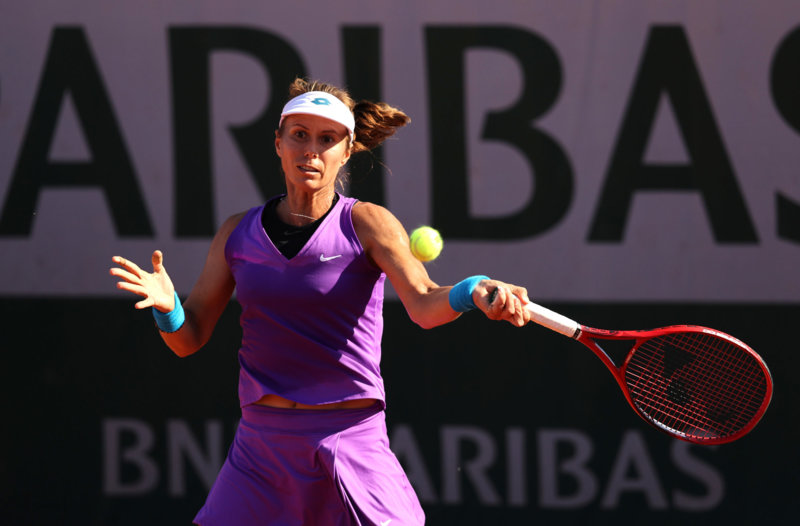
“She is looking forward to returning to the WTA”
The doping story of Lepchenko received a continuation in 2021. This time, a metabolite of modafinil was found in the blood of the athletes. In the US, the free sale of this drug is prohibited. It is available by prescription to combat drowsiness. In Russia, modafinil is considered a psychotropic drug, and its use is punishable by a prison term.
From the moment the sample was taken to the publication of the result, Varvara also managed to win the ITF tournament in Charleston. His results, of course, were annulled. It would seem that this time to avoid severe punishment will not work. The drug has been banned since 2003, when Lepchenko was still taking her first steps in her professional career. Harsh assumptions were initially confirmed: Varvara received a four-year disqualification.
But even in this almost hopeless situation, the American was able to get out. The side of the tennis player said that the drug got into her blood by accident, through dietary supplements. Moreover, the absurdity of the line of defense is simply amazing. It turns out that after the verdict, Lepchenko purely by chance discovered in her purse the dietary supplement that she bought a year before the disqualification … in Ukraine.
Luckily, one of the jars turned out to be closed, and it was sent for examination to a laboratory accredited by WADA. During the test, luck was again on the side of the athlete. The experts found modafinil in the dietary supplement, although it was not listed on the package.
With the results of the study, Lepchenko appealed to the Court of Arbitration for Sport in Lausanne (CAS). The judges sided with the athlete and reduced the period of disqualification to 21 months as part of a settlement agreement with the ITF. WADA also did not challenge the decision by signing a settlement agreement.
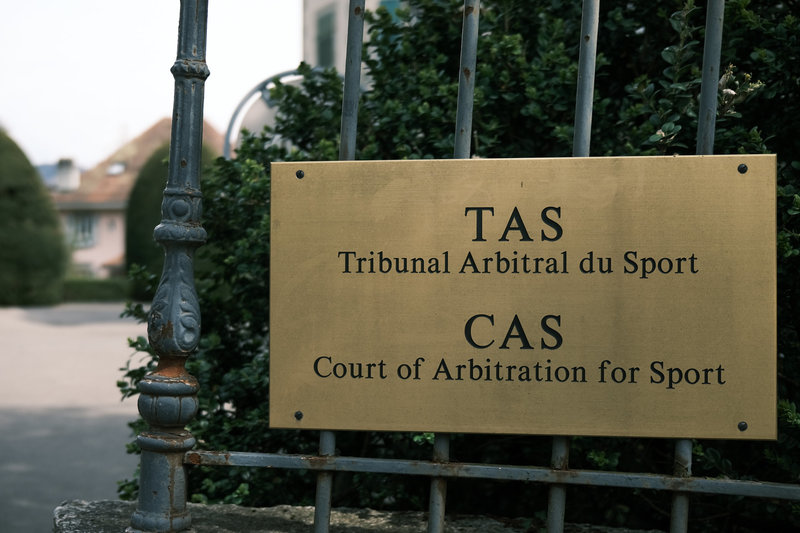
Barbara is relieved that during the long investigation she was able to prove that the positive result of the test was caused by a contaminated dietary supplement. She is looking forward to returning to the WTA Tour in May,” Lepchenko’s lawyer quotes The Associated Press.
Now the tennis player, twice caught doping, nothing prevents her from returning to the tennis courts in three months.
Source: Sportbox

I am a sports journalist who has written for a number of Sportish. I have a background in journalism and have been writing since I was young. My main focus is sports news, but I also write about general news. I am currently working as an author at Sportish.


38-year-old Serbian tennis player Novak Djokovic (ATP 4) reached the quarter-finals of the 2026 Australian Open ahead of schedule.
On January 26, Novak was supposed to play in the fourth round against the representative of the Czech Republic, Jakub Mensik (ATP 17). However, the meeting will not take place – Meshik withdrew from the fight due to an abdominal muscle injury.
“After doing everything we could to continue my performance, I had to withdraw from the Australian Open due to an abdominal muscle injury that got worse in the last matches. Despite the disappointment, I will remember for a long time my debut in the fourth round of this tournament. I felt great energy from the fans and the atmosphere in Melbourne was really special,” said Yacoub.
The winner of the match between Lorenzo Musetti (Italy, ATP 5) and Taylor Fritz (USA, ATP 9) will be Novak’s next opponent.
Djokovic will play in the quarter-finals of the major tournament in Melbourne for the 16th time in his career and will compete in the semi-finals for the 13th time.

Source: Sport UA

I am a sports journalist who has worked in print and online. I have authored articles for a sports website and have covered sports news for over 6 years.

The third racket of the world, German Alexander Zverev, reached the quarterfinals of the Australian Open.
In the fourth round, Zverev defeated Argentinean Francisco Cerundolo with a score of 6:2, 6:4, 6:4. The meeting lasted 2 hours 12 minutes.
The next opponent of the 28-year-old German will be the winner of the match Daniil Medvedev (Russia, 11) – Lerner Thien (USA, 25).
Grand Slam Tournament. Australian Open. Melbourne (Australia). Hard. Total prize fund: about $75 million
Men. Fourth circle
Alexander Zverev (Germany, 3) – Francisco Serundolo (Arentina, 18) – 6:2, 6:4, 6:4
Source: Sportbox
I am a sports journalist who has written for a number of Sportish. I have a background in journalism and have been writing since I was young. My main focus is sports news, but I also write about general news. I am currently working as an author at Sportish.

Number three in the ATP rankings Alexander Zverev He reached the quarter-finals of the 2026 Australian Open, played on the hard courts of Melbourne Park.
In the fourth round of the major, Zverev confidently defeated the representative of Argentina in three sets Francisco Cherundolo (ATR 21) in 2 hours 12 minutes.
Australian Open 2026. 1/16 finals
Alexander Zverev (Germany) [3] – Francisco Cherundolo (Argentina) [18] – 6:2, 6:4, 6:4
Zverev played against Cherundolo for the sixth time and defeated his opponent for the third time.
Last year Alexander lost to Jannik Sinner in the Australian Open final. Zverev’s next opponent will be either Daniil Medvedev or Lerner Thien.
Zverev became the second quarterfinalist of AO-2026. Previously, Carlos Alcaraz reached this stage by beating Tommy Paul.
Photo gallery of the match
Source: Sport UA
I am a sports journalist who has worked in print and online. I have authored articles for a sports website and have covered sports news for over 6 years.


-

 Ligue 13 years ago
Renato Sanchez signed in Paris for five years
-

 Europa League4 years ago
In transfer alert at Olympiakos for additions and concessions
-

 Europa League4 years ago
Fenerbahce – Eintracht 1: 1: The Germans took 1st place in the Olympiacos group
-

 Europa League4 years ago
Without Nainggolan and Samata, the 11th team from Antwerp
-

 Europa League4 years ago
Europa League
-

 Europa League4 years ago
Atalanta announced the acquisition of Boga
-

 Europa League4 years ago
Fears that Zapata will be out for 4 months
-

 Premier League4 years ago
Except for the rest of January, Sean was injured