
Tennis
“Spitting at the ceiling, burning through life.” Cool Russian tennis player died in a terrible binge


Alexander Volkov / Photo: © RIA Novosti / Vladimir Rodionov
Alexander tried to fight addiction, but he failed to overcome himself.
Alexander Volkov considered one of the first stars of Russian tennis. He performed on the international stage back in the 80s, when our athletes were just beginning to be released on independent foreign tours. Soon the Russian achieved recognition abroad, earning a solid reputation. After the end of his career, huge prospects opened up before him – however, addiction prevented Alexander from realizing himself.
22 years after leaving the sport, the famous tennis player died from a terrible binge.
“He did not differ in special diligence”
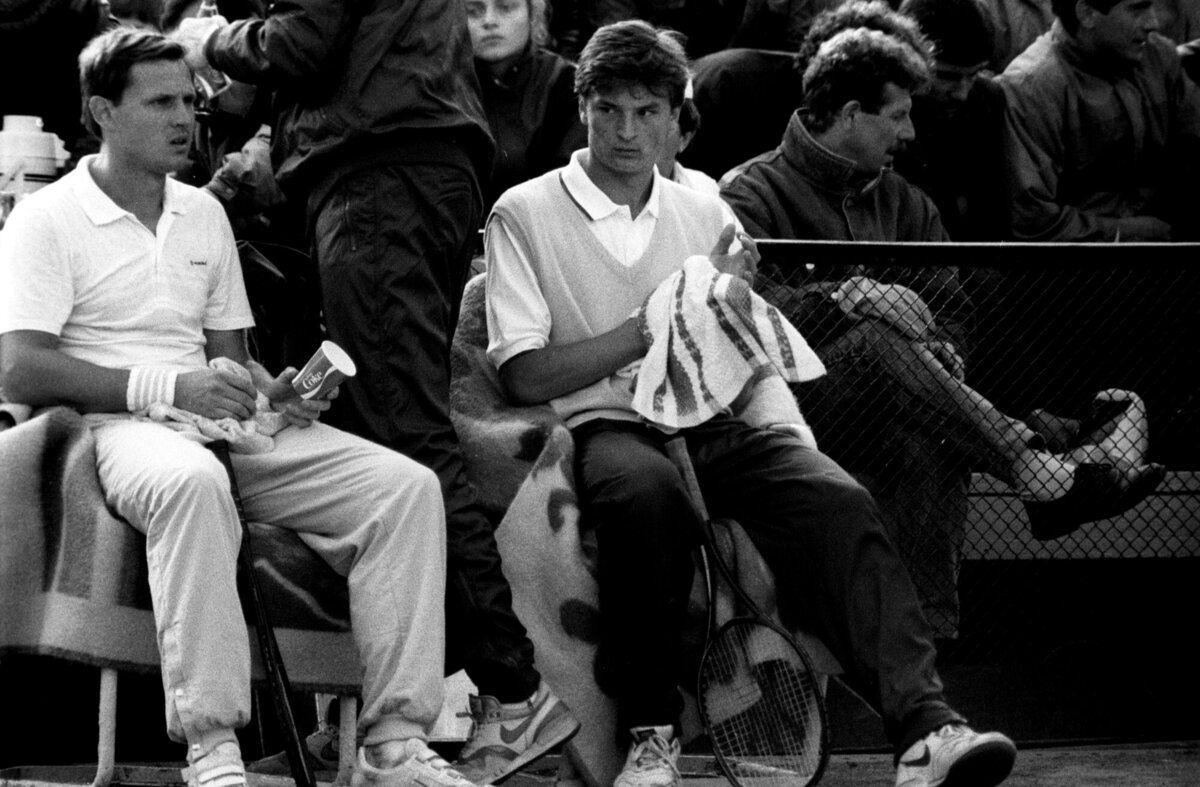
Volkov started playing tennis in Kaliningrad. The future champion was lucky in many respects with his homeland: at that time in a remote area there was one of the most developed tennis infrastructures in the country, which had remained since German times.
Valery Shklyar, Alexander’s first coach, later said that “he did not differ in special diligence”, but he was “exceptionally gifted”. Collective classes helped to reveal the athlete’s talent: competition greatly motivated the young athlete.
He came to sports quite late – at the age of 10, but by the age of 15 he was showing solid results. At this moment, Volkov faced the first serious challenge: the tennis player received a fracture in his right shoulder, due to which he was out of action for six months. Alexander even thought about switching to football, but in the end he retrained as a left-hander – and continued to perform.
14th racket of the world
A breakthrough in Volkov’s career happened when he was 19 years old. The tennis player reached the final of the USSR championship, and then went to his first international tournament. Alexander was lucky to start international tours in times of transition for the country: the state paid for the trips in full, and all the premium players were taken away for themselves, and not given to the Sports Committee. As the athlete himself later said, they took the best from socialism and capitalism.
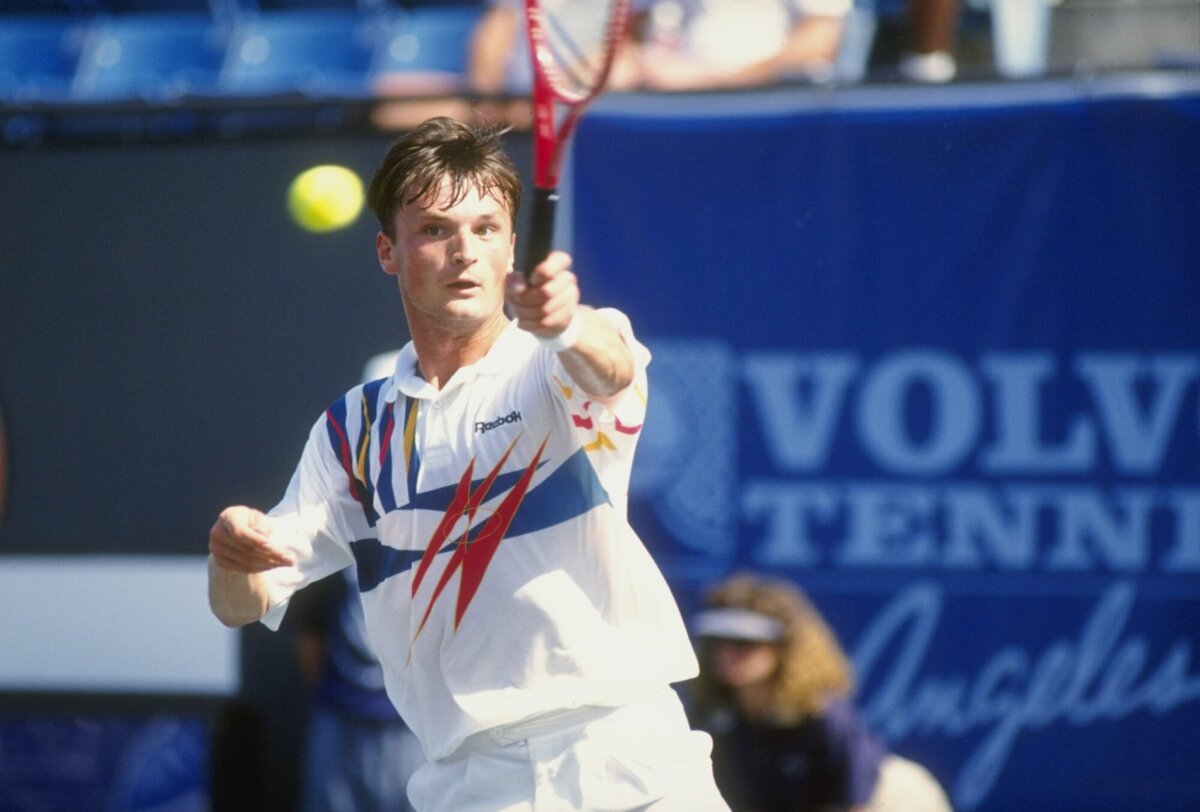
A year later, the Russian first announced himself at the Grand Slam tournaments. Volkov reached the 1/8 finals of Wimbledon on the first try, beating the best player on the planet, Stefan Edberg, in three sets, although he himself was not even in the top 500 rating. Alexander continued to progress, and already in 1991 he won his first title in Milan. The peak of the tennis player’s career came in 1993: the 26-year-old athlete made it to the semi-finals of the US Open, becoming the 14th racket of the world.
Later, Volkov became famous as part of his performances for the national team. Together with Yevgeny Kafelnikov, the tennis player reached the Davis Cup final twice in a row, but in both cases, the Russian team was content with only silver.
“I’ve been idle for two years”
At the age of 30, Volkov, whose potential by that time had not been exhausted at all, unexpectedly announced his retirement. By that time, Alexander had accumulated a solid $ 3.3 million in prize money for those times – and planned to just relax:
“I was idle for two years. He spat at the ceiling, spent money, traveled with his wife abroad. In short, he wasted his life. At first I liked it, and then I realized that I was tired of idleness. He looked at himself in the mirror: his cheeks were rounded, his tummy appeared, he began to weigh more than 90 kilograms. No, I think it won’t work, you can’t turn into a pig, ”AiF quotes Alexander.
In the late 90s, Volkov tried himself as a manager: he became the general director of the Kremlin Cup. The specifics of this work, however, did not suit the athlete: the organization of a large tournament turned out to be an exhausting task.
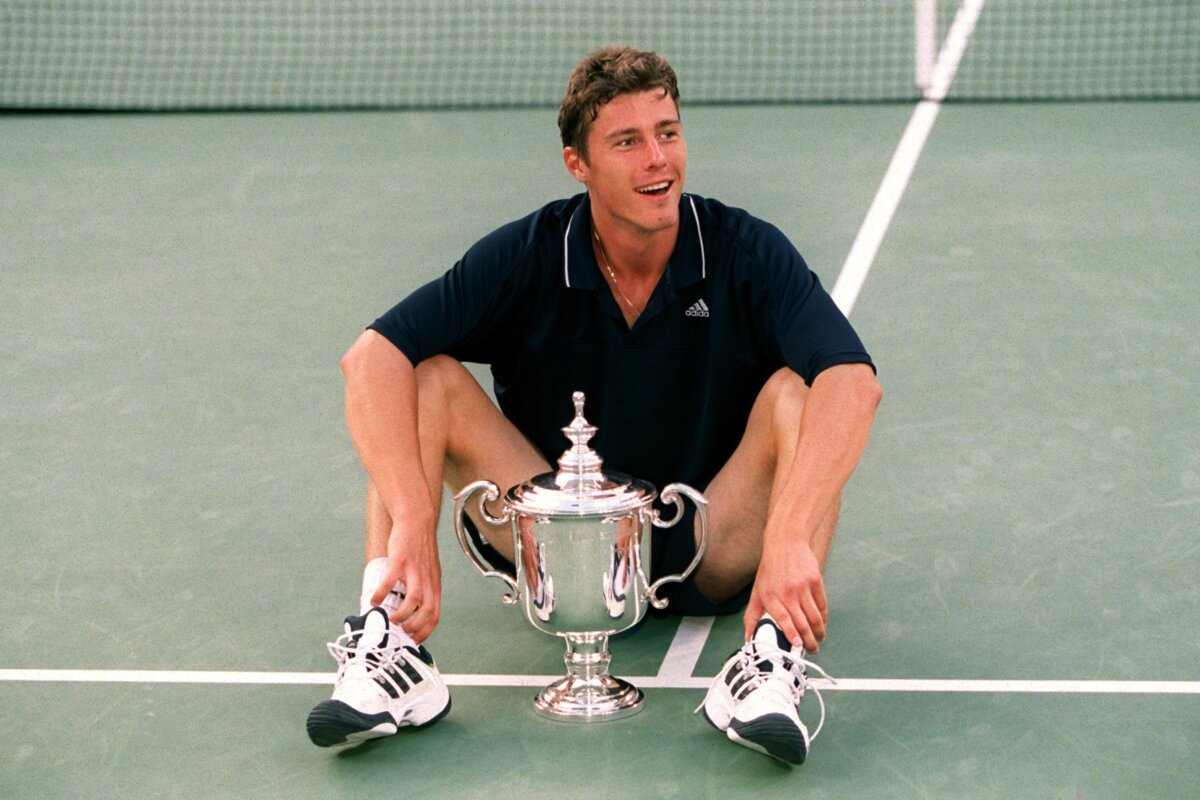
As a result, Alexander switched to the coaching path, where he showed himself very well. Volkov coached the men’s and women’s national teams of Russia, and also managed to work with many young talents: from Anastasia Myskina and Elena Dementieva to Mikhail Yuzhny and Marat Safin. Working with the latter turned out to be especially fruitful: it was under the leadership of Volkov that Safin made a sensation by winning the US Open in 2000.
– On the way to the final, I had breakfast in the car, and the coach told me: don’t drain, don’t zass. Take at least a couple of games in each set. And so I went out to the court with such an attitude. He smacked me, I already decided that I would lose, and in the end I went to the match without any pressure, ”Sports.ru cites Safin’s memories.
“He said he couldn’t get out of the binge”
Unfortunately, Volkov did not have a stable coaching career: the potential of a specialist was killed by alcohol addiction. It developed in a former tennis player a few years before his death. Alexander confessed to friends that, starting to drink, he could no longer stop. The athlete regularly went into long bouts and was periodically treated in special clinics, but in vain.
The famous tennis player Andrei Chesnokov said that in June 2019 he offered Volkov to go to the World Championships. However, he replied that he was unlikely to be able to get out of the binge. Chesnokov cheered up his comrade, said that he believed in him. And indeed, after a while, Alexander seemed to have left the hospital “clean” …
But it was not possible to hold out for long, especially since there was no one to support Volkov: by that time, his wife had long since left him with her son. Soon, the once famous tennis player went into another heavy binge, which the body could no longer stand. In October 2019, Volkov died suddenly at the age of only 52.
Source: Sportbox

I am a sports journalist who has written for a number of Sportish. I have a background in journalism and have been writing since I was young. My main focus is sports news, but I also write about general news. I am currently working as an author at Sportish.


Ukraine’s first racket Elina Svitolina (WTA 12), reached the third round of the 2026 Australian Open.
In the second round, the Ukrainian player defeated the Polish representative in two sets. Linda Klimovichova (WTA 134) in 1 hour 16 minutes.
Australian Open 2026. 1/32 final
Elina Svitolina (Ukrainian) [12] – Linda Klimowicova (Poland) [Q] – 7:5, 6:1
Svitolina had her first head-to-head encounter with Klimovichova.
Her next opponent will be either Talia Gibson or Diana Schneider. In her major debut in Melbourne, Elina defeated Kristina Buksha.
Svitolina will compete in the third round of the Grand Slam tournament for the 33rd time in her career and at the Australian Open for the 11th time. Elina reached the quarter-finals of the Australian slam last year.
Svitolina has seven wins in 2026 and has yet to lose. Before the start of the Aus Open, the Ukrainian became the champion of the WTA 250 competition in Auckland.
Elina is Ukraine’s only representative currently competing in singles at the Australian Open 2026.
Video review of the match
Match statistics

Photo gallery of the match
Source: Sport UA

I am a sports journalist who has worked in print and online. I have authored articles for a sports website and have covered sports news for over 6 years.

The last Australian Open champion, Madison Keys, who started defending the cup by beating Ukrainian Alexandra Oleynikova, held a press conference after a successful start in the major:
– Earning your first victory as a reigning champion is never easy. Please tell us about your match and performance today.
“I think I started a little slow today and of course I was nervous, but I have to give credit to my opponent. He has a rather unconventional style and that made the match a little more difficult to start. But at the end of the tiebreak I really found my game and managed to carry that into the second set.
– Congratulations on your victory. Can you tell me what it was like to play the last four rallies of the first set from your perspective?
“I think at that moment I felt that I was playing too passively and cautiously and not taking advantage of the opportunities that presented themselves. And when I play my best tennis, I shoot when I see an opportunity. When I lost it was 6:4, right? Yes, when it was 6-4 I felt that at least I was playing with the right balls and it’s okay if I’m losing points that way. From then on the momentum changed a little bit and then I decided to just play. I’m confident and I can handle the punches.”
– You mentioned his playing style. When was the last time you played against someone who used candles so efficiently and effectively?
– Probably in the under 12 category (laughs). And that’s no disrespect to him, of course, but it’s been a long time since he’s played against someone with that style, even though he plays really effectively. I wasn’t able to watch most of their matches beforehand; There wasn’t much information on the internet. The preparation turned out to be a little deceiving, but already in the match everything looked different. The balls were flying very high and very deep, it was very difficult. Immediately after the rebound I felt like I couldn’t volley or receive the ball because he shot it so well. So I had to wait for the right opportunities. But yeah, I was really impressed with how well he made those shots.
– You talked about the series of points you won in a row to take the first set. What was going on in your head at that moment? This is your first match as the reigning Grand Slam champion and also facing an opponent with an unconventional style can be confusing. What were you thinking?
– I felt like I played too cautiously in the beginning and didn’t trust my first impulses. I was constantly changing my mind about what I wanted to do and this slowed down my footwork. I felt like I was just reacting and not playing according to plan. When I won the first match – I think the score was 0:4 – I relaxed a bit and felt like I was thinking more clearly. Even when I surrendered, I realized what I had done and what needed to be fixed. From then on I slowly started to put everything together and the end of the tiebreaker finally sealed everything.
– Madison, you did a great job today. You didn’t play in the last months of last year. Was it more physical, more mental, or a combination of both? So what was the return process like?
“It was more of a physical thing.” At the end of the season, I felt like I wasn’t one hundred percent healthy and that something was constantly bothering me. When things get tough, it’s important for me to feel good physically. So I focused on recovery. Unfortunately, I also fell ill at the end of the year, but the opportunity to recuperate and prepare as physically as possible was crucial.
– Let me clarify: Was it more about rest or was it about working out in the gym and strengthening weak points?
“It’s more like this is the time to really get involved in rehab.” The season is so long and it’s hard to find windows to maintain strength, conditioning and keep everything working properly. At one point the season got out of control and I couldn’t find the right blocks of time.
– Despite all the mental and physical preparations to defend your first Slam title, how much does everything change when you step on the court? Or does everything disappear?
“I don’t think it’s all going to end.” No matter how you envisioned the moment, no matter how you prepared, you know you did your best. But when they say “get ready, play”, everything hits you in a way that is hard to explain. And no matter how frustrating and stressful it is, I still remind myself how few people get the chance to be in a moment like this. Going on the field today and feeling the support of the stands, I am always ready to accept this stress.
– Your serve used to seem very short, but not anymore. What was the process and rationale behind these changes?
“I tried to speed up my swing a little bit.” Because I served in the same way for so long, it was difficult for me to quickly move into a Cup position. The idea was to make the movement shorter and faster and then rebuild. However, the season does not allow much time for experiments. Before finals, I prepared for the presentation to be different, knowing that I would make changes later. The plan was always to lengthen it again and improve it.
– Madison, do you share other players’ concerns that prize money at Grand Slam tournaments should receive a larger share of the total revenue?
“From my perspective, I would be more concerned about Grand Slam tournaments investing in the welfare of the players. The tours are already doing that – health care, retirement, etc. At the end of the day, we are all partners and we need each other. So, first and foremost, I would like to see investment in the welfare of the players. Of course, I would like the money to go into prize money, but first and foremost to protect the players.”
– The question is less serious. Many women, including my wife, find it a nightmare to attend an event and see someone wearing the same dress. Does it bother tennis players that you often play in the same jersey in tournaments?
– I don’t. I think it’s different for everyone, but personally I always like to wear what I’m told to wear.
Source: Sport UA
I am a sports journalist who has worked in print and online. I have authored articles for a sports website and have covered sports news for over 6 years.

Russian Alana Tuaeva has been temporarily suspended on suspicion of violating the Tennis Anti-Corruption Program (TACP), the press service of the International Tennis Integrity Agency (ITIA) reports.
Tuaeva, 26, has been temporarily suspended from competition since December 19, 2025. The Russian woman’s maximum place in the WTA ranking is 1282nd (September 2025).
“There is a possibility that a person covered by the program has committed a corruption offence,” the statement said.
Also, provisional suspensions were applied to Serbian tennis player Nicole Palecek and three officials – Marko Ristic (Serbia), Zsolt Bagosi and Tamas Tarnai (Hungary).
None of the five people exercised the right to appeal their suspension to an independent anti-corruption body.
Source: Sportbox
I am a sports journalist who has written for a number of Sportish. I have a background in journalism and have been writing since I was young. My main focus is sports news, but I also write about general news. I am currently working as an author at Sportish.


-

 Ligue 13 years ago
Renato Sanchez signed in Paris for five years
-

 Europa League4 years ago
In transfer alert at Olympiakos for additions and concessions
-

 Europa League4 years ago
Fenerbahce – Eintracht 1: 1: The Germans took 1st place in the Olympiacos group
-

 Europa League4 years ago
Without Nainggolan and Samata, the 11th team from Antwerp
-

 Europa League4 years ago
Europa League
-

 Europa League4 years ago
Atalanta announced the acquisition of Boga
-

 Europa League4 years ago
Fears that Zapata will be out for 4 months
-

 Premier League4 years ago
Except for the rest of January, Sean was injured